
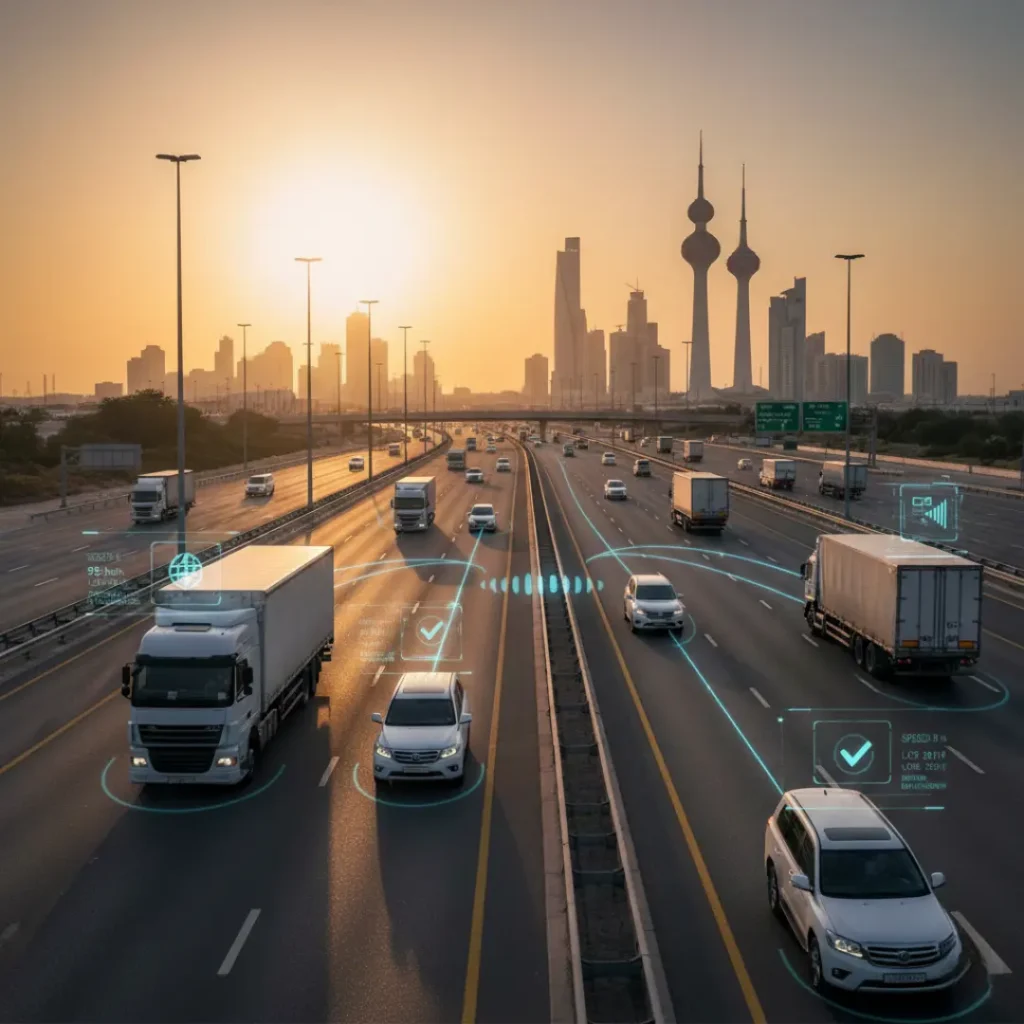
Road safety is a top priority for fleet operators across Kuwait, where managing commercial vehicles in busy urban environments and long desert highways poses unique challenges. Modern GPS Fleet Management solutions combined with AI-powered driver monitoring are revolutionizing how businesses protect their drivers, vehicles, and the public. These integrated systems provide real-time visibility into vehicle locations, driver behavior, and potential safety risks. By leveraging advanced technology, companies can reduce accidents, lower insurance costs, and create a culture of accountability. This blog explores how these intelligent systems are making Kuwait’s roads safer while improving operational efficiency for businesses.
Key Takeaways
- GPS Fleet Management systems provide real-time vehicle tracking, route optimization, and comprehensive fleet visibility across Kuwait’s diverse terrain and traffic conditions.
- AI driver monitoring detects dangerous behaviors like drowsiness, distraction, and harsh braking, enabling immediate intervention before accidents occur.
- Combined GPS and AI technologies reduce accident rates by up to 60%, lower fuel consumption, and significantly decrease insurance premiums for commercial fleets.
The Growing Need for Advanced Fleet Safety in Kuwait
Kuwait’s rapid economic development and expanding commercial transportation sector demand sophisticated safety measures to protect lives and assets on the road.
Kuwait’s fleet industry faces distinctive challenges that make advanced safety systems essential. The country experiences heavy commercial traffic on major highways, extreme weather conditions affecting visibility, and diverse driving patterns across urban and rural areas. According to regional traffic studies, commercial vehicles are involved in approximately 25% of road accidents despite representing only 15% of total vehicles. Traditional fleet GPS tracking systems offered basic location data but lacked the intelligence to prevent accidents before they happened. Today’s integrated solutions combine vehicle fleet tracking solutions with behavioral analytics to create a comprehensive safety ecosystem. Companies using these systems report significant reductions in accident-related costs and improved driver performance. The technology addresses both vehicle management and human factors, creating a dual-layer protection system that responds to Kuwait’s specific transportation challenges.
How GPS-Based Fleet Management Software Enhances Operational Visibility
Real-time fleet monitoring provides fleet managers with complete transparency over vehicle locations, routes, speeds, and utilization patterns across their entire operations.
Modern GPS-based fleet management software transforms how businesses oversee their mobile assets. The system continuously tracks every vehicle’s precise location, speed, direction, and stop duration, sending this data to centralized dashboards accessible from any device. Fleet managers can set geofences around designated areas, receiving instant alerts when vehicles enter or exit zones. The technology enables route optimization by analyzing historical traffic patterns and suggesting the most efficient paths, reducing fuel costs by 10-15% on average. Real-time fleet monitoring also prevents unauthorized vehicle use through after-hours movement alerts and idle time tracking. For companies operating across Kuwait’s varied landscape, from Ahmadi’s industrial zones to Kuwait City’s congested streets, this visibility proves invaluable. The software generates detailed reports on vehicle utilization, maintenance schedules, and driver performance, helping businesses make data-driven decisions that improve both safety and profitability while ensuring compliance with local transportation regulations.
AI Driver Monitoring: Preventing Accidents Through Behavioral Analysis
Artificial intelligence analyzes driver behavior in real-time, identifying dangerous patterns like fatigue, distraction, and aggressive driving before they lead to accidents.
AI-powered driver monitoring represents a breakthrough in proactive accident prevention. Dashboard-mounted cameras equipped with machine learning algorithms continuously observe driver facial expressions, head position, eye movement, and body language. The system detects signs of drowsiness (frequent blinking, drooping eyelids), distraction (looking at phones, turning away from the road), and emotional states that affect driving quality. When dangerous behavior is identified, the system triggers immediate audio-visual alerts to refocus the driver’s attention. These advanced fatigue and distraction detection systems also monitor driving patterns including harsh acceleration, sudden braking, aggressive cornering, and speeding violations. Each incident is recorded with video evidence, creating an objective performance record that supports driver coaching and training programs. Studies show that fleets using AI monitoring experience 40-60% fewer accidents within the first year of implementation. The technology works particularly well during long-haul desert routes where fatigue poses significant risks, and in Kuwait’s summer months when extreme heat can impair driver alertness and decision-making capabilities.
Integration Benefits: When GPS and AI Work Together
Combining GPS fleet tracking with AI driver monitoring creates a synergistic safety system that addresses both vehicle management and human behavior simultaneously.
The true power emerges when GPS Fleet Management and AI monitoring function as a unified platform. When the GPS system detects excessive speed on a highway, it cross-references this with AI driver monitoring data to determine if distraction or fatigue contributed to the behavior. This contextual intelligence enables more accurate incident analysis and targeted interventions. Fleet managers receive comprehensive reports showing not just where vehicles traveled, but how safely they were driven at each location. The integration enables predictive analytics that identify high-risk drivers before major incidents occur by correlating GPS route data with behavioral patterns. For example, a driver consistently showing fatigue signs on specific routes can be reassigned or given additional rest breaks. The combined system also enhances vehicle safety features by integrating with collision avoidance systems, blind spot monitoring, and reverse sensors. Insurance companies increasingly offer premium discounts ranging from 15-30% for fleets using integrated safety technologies, recognizing the dramatic reduction in claim frequency and severity.
Real-World Impact: Measuring Safety Improvements in Kuwait
Kuwaiti businesses implementing integrated GPS and AI fleet systems report measurable improvements in accident rates, operational costs, and driver accountability within months of deployment.
The results speak for themselves across Kuwait’s commercial transportation sector. Logistics companies using vehicle fleet tracking solutions combined with AI monitoring report average accident reductions of 55% in the first year. Fuel efficiency improves by 12-18% through better route planning and elimination of harsh driving behaviors. Driver behavior scores typically improve 30-40% within three months as employees become more conscious of monitoring and receive regular coaching. Companies also experience reduced vehicle wear and tear, with maintenance costs dropping 20-25% due to smoother driving patterns. Employee retention improves as safer working conditions and fair performance evaluation systems increase job satisfaction. One Kuwait-based delivery service reduced insurance premiums by 22% after demonstrating consistent safety improvements through documented system data. The technology also protects companies legally by providing video evidence in accident disputes, with 85% of reviewed incidents being resolved favorably when clear footage exists. Beyond numbers, businesses report improved corporate reputation as clients and partners value their commitment to safety and environmental responsibility through reduced emissions and optimized operations.
Conclusion
The integration of GPS Fleet Management and AI driver monitoring is transforming road safety across Kuwait’s commercial transportation sector. These technologies provide unprecedented visibility into vehicle operations and driver behavior, enabling proactive interventions that prevent accidents before they occur. Companies benefit from reduced operational costs, lower insurance premiums, and improved driver performance while contributing to safer roads for all. As Kuwait continues its economic development, investing in intelligent fleet management systems becomes not just a competitive advantage but a responsibility to employees, customers, and the community. TechBiz Solutions offers comprehensive fleet management solutions designed specifically for Kuwait’s unique operational environment. Contact us today to learn how our Safari Fleet Management System can enhance your fleet safety and efficiency.
Frequently Asked Questions
GPS Fleet Management uses satellite technology to track vehicle locations in real-time, providing fleet managers with data on routes, speeds, and vehicle status. The system sends information to centralized platforms where managers can monitor operations, optimize routes, and improve safety.
AI driver monitoring uses cameras and machine learning algorithms to analyze facial expressions, eye movement, and head position. It identifies signs of drowsiness, distraction, and emotional states, triggering immediate alerts when dangerous behaviors are detected to prevent accidents.
Yes, GPS fleet tracking systems reduce fuel costs by 10-15% on average through route optimization, reducing idle time, and eliminating unauthorized vehicle use. The technology analyzes traffic patterns to suggest efficient routes and monitors driving behaviors that waste fuel.
Absolutely. Integrated GPS and AI safety systems scale to fleets of all sizes. Small businesses benefit from reduced insurance costs, improved driver accountability, and operational efficiency. Many providers like TechBiz Solutions offer flexible solutions tailored to different fleet sizes.
Most businesses see positive ROI within 6-12 months through reduced accidents, lower fuel costs, decreased insurance premiums, and improved vehicle maintenance. The exact timeline depends on fleet size and operational complexity, but accident reduction benefits often appear within weeks.
Yes, modern fleet management systems are designed to function reliably in Kuwait’s harsh climate, including extreme heat and occasional dust storms. The technology uses industrial-grade components rated for high temperatures, ensuring consistent performance year-round across challenging conditions.
Reputable fleet management providers implement strict data privacy protocols complying with international standards. Data is encrypted during transmission and storage, access is role-based and logged, and driver information is used solely for safety and operational purposes with transparent policies.
Yes, modern fleet management platforms offer APIs and integration capabilities with ERP systems, accounting software, and dispatch platforms. This enables seamless data flow across business operations, eliminating manual data entry and improving overall efficiency through comprehensive digital solutions.
AI monitoring provides objective, video-documented evidence of driving behaviors, enabling targeted coaching based on actual performance data. Trainers can review specific incidents with drivers, demonstrating exactly what occurred and how to improve, resulting in more effective and personalized training outcomes.
Fleet managers receive alerts about consistently poor performance, enabling early intervention through coaching, additional training, or route reassignment. Most systems show dramatic behavior improvement after drivers understand monitoring criteria. Persistent issues may require formal performance management or reassignment to less demanding routes.