
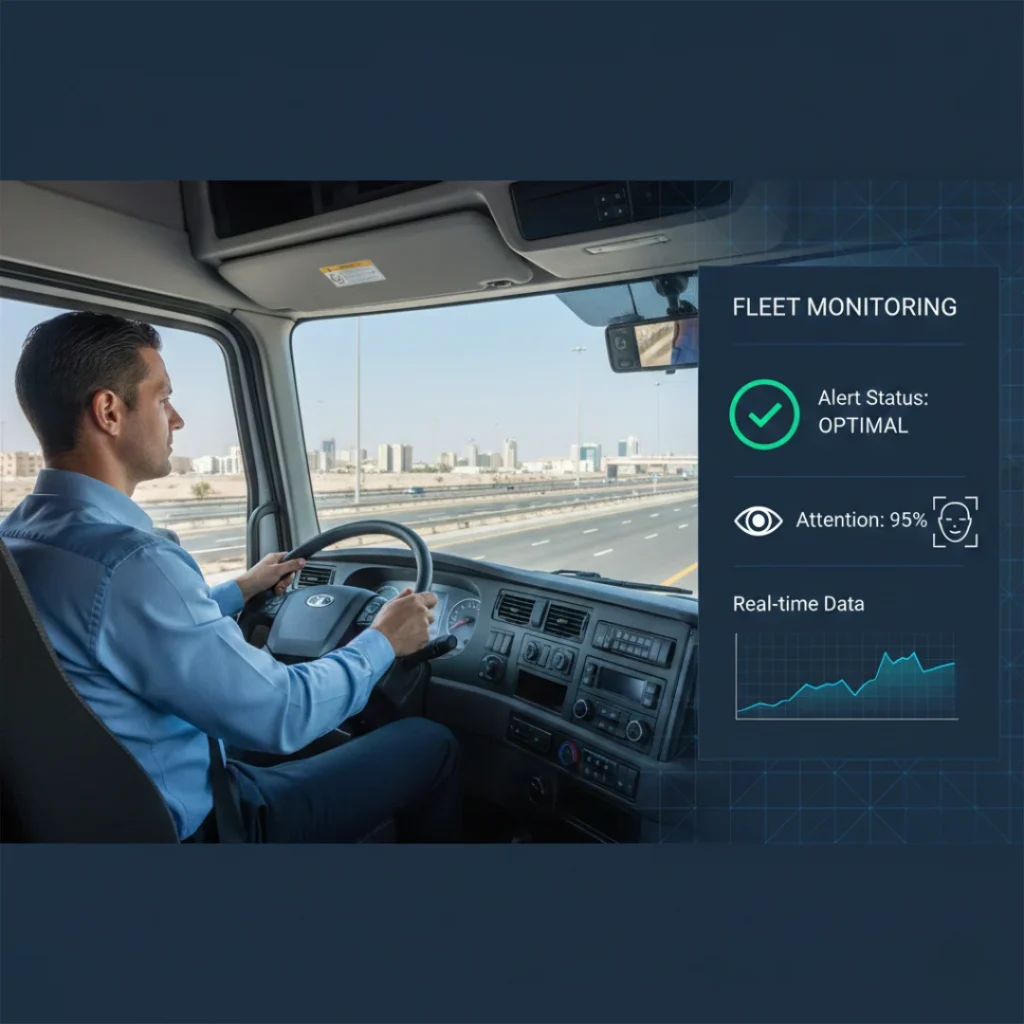
Road safety remains a critical concern across Kuwait’s highways and urban roads. The AI Driver Monitoring System in Kuwait is transforming how fleet operators and businesses ensure driver safety. This advanced technology uses artificial intelligence to monitor driver behavior in real-time, detecting signs of fatigue, distraction, and unsafe driving patterns before accidents occur. As Kuwait continues to modernize its transportation infrastructure, implementing AI-driven safety solutions has become essential for reducing road accidents and protecting valuable assets. This blog explores how these intelligent systems work and why they’re becoming indispensable for businesses operating vehicle fleets in Kuwait.
Key Takeaways
- AI Driver Monitoring Systems use advanced cameras and algorithms to detect fatigue, distraction, and unsafe driving behaviors in real-time, reducing accident risks by up to 80% in commercial fleets.
- Driver Distraction Detection identifies phone usage, eating, smoking, and other distracting activities, immediately alerting drivers to refocus on the road ahead.
- Fatigue Detection Technology monitors eye movements, yawning patterns, and head position to prevent drowsy driving incidents, particularly during long-haul operations in Kuwait’s logistics sector.
Understanding AI Driver Monitoring Technology
AI Driver Monitoring Systems combine advanced computer vision, machine learning algorithms, and real-time data processing to continuously assess driver attention, alertness, and behavior patterns throughout their journey.
The AI Driver Monitoring System in Kuwait represents a significant technological advancement in fleet safety management. These systems use sophisticated cameras mounted on vehicle dashboards to monitor driver facial expressions, eye movements, and head positions. The AI algorithms analyze this data in milliseconds, identifying dangerous behaviors like drowsiness, distraction, or erratic driving patterns. When the system detects a potential safety risk, it immediately triggers audio-visual alerts to warn the driver and simultaneously sends notifications to fleet managers. This dual-layer protection ensures that safety concerns are addressed both in real-time by the driver and strategically by management teams who can implement corrective training measures.
How Driver Distraction Detection Systems Prevent Accidents
Driver distraction accounts for nearly 25% of all road accidents in the Middle East, making detection systems a critical investment for businesses operating vehicle fleets in Kuwait and surrounding regions.
The Driver Distraction Detection system in Kuwait identifies various forms of driver inattention that compromise road safety. These include mobile phone usage, eating, drinking, smoking, and looking away from the road for extended periods. Advanced systems can even detect when drivers are adjusting vehicle controls excessively or engaging with passengers inappropriately. The moment distraction is identified, the system delivers immediate audible and visual warnings, prompting drivers to refocus their attention. Fleet operators benefit from detailed reports showing distraction patterns across their driver workforce. This data enables targeted coaching programs and helps identify drivers who may need additional safety training. Companies using fleet management solutions can integrate distraction detection seamlessly into their existing monitoring infrastructure, creating a comprehensive safety ecosystem.
Advanced Driver Fatigue Detection: Protecting Long-Haul Operations
Fatigue-related accidents are 50% more likely to result in serious injuries or fatalities compared to other accident types, making fatigue detection technology essential for logistics and transportation companies.
The Advanced Driver Fatigue Detection system in Kuwait uses cutting-edge biometric analysis to identify drowsiness before it becomes dangerous. The system monitors micro-sleep episodes, excessive yawning, slow eyelid closures, and head nodding movements. By tracking these physiological indicators, the AI can predict fatigue levels with remarkable accuracy. When fatigue is detected, the system doesn’t just alert the driver—it can also recommend rest breaks and even suggest the nearest safe stopping locations. This technology is particularly valuable for Kuwait’s logistics sector, where drivers often operate during nighttime hours or make long desert crossings. Organizations implementing advanced fatigue and distraction detection systems report significant reductions in accident rates and improvements in driver well-being, contributing to both safety and operational efficiency.
Real-Time Alerts and Fleet Management Integration
Integration with existing fleet management platforms transforms raw monitoring data into actionable insights, enabling proactive safety management rather than reactive incident response.
Modern AI driver monitoring solutions don’t operate in isolation—they integrate seamlessly with comprehensive fleet management platforms to create a unified safety ecosystem. When the system detects unsafe behaviors, it generates instant alerts through multiple channels: in-cabin warnings for immediate driver correction, mobile notifications for supervisors, and dashboard updates for fleet managers. This multi-tiered alert system ensures that safety issues receive appropriate attention at every organizational level. The integration also enables advanced analytics, allowing businesses to identify trends like specific routes or times of day when incidents occur more frequently. Fleet operators can access detailed performance reports showing each driver’s safety score, incident history, and improvement trajectories. Companies leveraging comprehensive fleet safety technologies gain competitive advantages through reduced insurance premiums, lower accident-related costs, and enhanced driver retention rates.
Benefits for Kuwait Businesses: ROI and Compliance
Businesses implementing AI driver monitoring systems typically achieve return on investment within 12-18 months through reduced accident costs, lower insurance premiums, and improved operational efficiency.
Kuwait businesses adopting AI driver monitoring technology experience measurable benefits across multiple dimensions. Insurance companies increasingly offer premium discounts—often 15-30%—to fleets equipped with advanced safety monitoring systems. Accident reduction translates directly to lower repair costs, reduced vehicle downtime, and decreased liability exposure. Beyond financial benefits, these systems help companies comply with evolving safety regulations and demonstrate their commitment to duty of care for employees. Driver behavior typically improves by 40-60% within the first three months of implementation, as awareness of monitoring encourages more responsible driving habits. Organizations also report reduced fuel consumption, as safer driving correlates with more economical vehicle operation. For businesses exploring comprehensive technology solutions, custom digital platforms can integrate driver monitoring with other operational systems for holistic business management.
Implementation Best Practices for Maximum Impact
Successful implementation requires clear communication with drivers, comprehensive training programs, and a culture that emphasizes safety improvement rather than punitive monitoring.
Implementing an AI Driver Monitoring System effectively requires more than just installing hardware. Begin with transparent communication explaining how the technology protects drivers and improves workplace safety. Conduct thorough training sessions where drivers understand system capabilities, alert meanings, and appropriate responses. Establish clear policies about data usage, privacy protections, and how monitoring information influences performance evaluations. Start with a pilot program involving enthusiastic early adopters before full fleet deployment. This approach allows you to refine processes and demonstrate success stories that encourage broader acceptance. Regular feedback sessions with drivers help identify system improvements and reinforce the safety-first culture. Consider gamification elements like safety leaderboards or recognition programs for consistently safe drivers. Integration with existing fleet management tools ensures that monitoring data flows seamlessly into operational decision-making processes. Companies seeking implementation support can connect with experienced technology providers who understand Kuwait’s unique business environment and regulatory landscape.
Conclusion
The AI Driver Monitoring System in Kuwait represents a transformative approach to fleet safety and driver protection. By detecting fatigue, distraction, and unsafe behaviors in real-time, these intelligent systems prevent accidents before they occur. Businesses across Kuwait’s transportation, logistics, and service sectors are discovering that investing in advanced monitoring technology delivers substantial returns through reduced accidents, lower insurance costs, and improved driver performance. As road safety continues gaining priority in Kuwait’s development agenda, AI-driven monitoring solutions will become increasingly essential. Contact TechBiz Solutions today to learn how we can implement customized driver monitoring systems that protect your drivers and strengthen your business operations.
Frequently Asked Questions
An AI Driver Monitoring System is advanced technology that uses cameras and artificial intelligence algorithms to continuously monitor driver behavior, detecting signs of fatigue, distraction, drowsiness, and unsafe driving patterns in real-time to prevent accidents.
Driver fatigue detection systems analyze facial features including eye closure rates, yawning frequency, head position, and micro-sleep episodes. When drowsiness indicators are detected, the system immediately alerts drivers through audio-visual warnings and notifies fleet managers for intervention.
AI monitoring systems detect various distractions including mobile phone usage, eating, drinking, smoking, looking away from the road, and excessive interaction with passengers. The system provides instant alerts when any dangerous distraction patterns are identified during vehicle operation.
Yes, AI driver monitoring systems are legal in Kuwait. Many businesses use them to enhance workplace safety and reduce accident risks. However, companies must inform drivers about monitoring and comply with privacy regulations regarding data collection and usage.
Costs vary based on fleet size and features required, typically ranging from KD 80-200 per vehicle for installation and monthly monitoring. Most businesses achieve ROI within 12-18 months through reduced accidents, lower insurance premiums, and improved operational efficiency.
Yes, modern AI driver monitoring systems integrate seamlessly with existing fleet management and training platforms. This integration enables comprehensive safety analytics, automated reporting, and unified dashboard access for monitoring multiple safety metrics simultaneously.
Yes, advanced driver monitoring systems feature infrared technology that functions effectively in low-light and nighttime conditions. This capability is particularly valuable for Kuwait’s logistics operations where many deliveries and transportation activities occur during evening and overnight hours.
Implementation typically takes 2-4 weeks depending on fleet size. This includes hardware installation, software configuration, driver training, and system testing. Businesses can start with pilot programs on select vehicles before full fleet deployment for optimal results.
Yes, many insurance companies in Kuwait offer premium discounts of 15-30% for fleets equipped with AI driver monitoring systems. These technologies demonstrate proactive risk management, reducing accident likelihood and associated claims, which insurers reward with lower rates.
When unsafe behavior is detected, the system triggers immediate in-cabin audio-visual alerts to warn the driver. Simultaneously, it sends real-time notifications to fleet managers and logs incidents for later review, enabling both immediate correction and long-term safety coaching.