
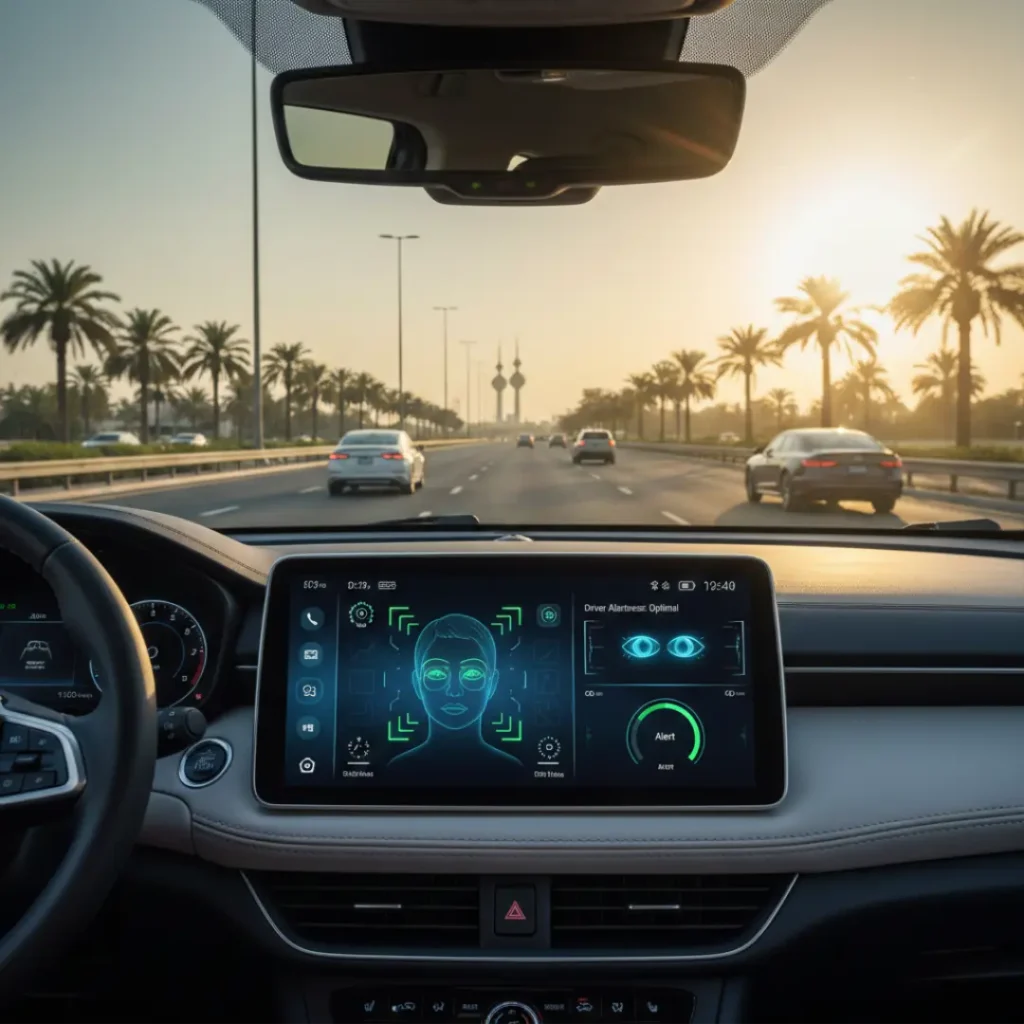
Road accidents cost Kuwait millions annually, with driver error accounting for over 85% of incidents. AI driver monitoring systems in Kuwait are revolutionizing fleet safety by detecting dangerous behaviors before accidents happen. These intelligent systems use cameras, sensors, and machine learning to monitor driver actions in real-time, alerting managers to fatigue, distraction, or reckless driving. Businesses implementing this technology report accident reductions of up to 40% and significant savings on insurance and vehicle repair costs.
Key Takeaways
- AI driver monitoring systems in Kuwait use advanced cameras and sensors to detect fatigue, distraction, mobile phone use, and aggressive driving patterns in real-time, sending instant alerts to fleet managers and drivers.
- Businesses implementing smart driver safety monitoring Kuwait solutions experience 30-40% fewer accidents, reduced insurance premiums, lower fuel costs through behavior improvement, and enhanced driver accountability.
- Modern systems integrate seamlessly with existing fleet management platforms, offering features like facial recognition, drowsiness detection, seat belt monitoring, and comprehensive behavior analytics for data-driven safety improvements.
How AI Driver Monitoring Systems Work in Kuwait’s Fleet Operations
Smart driver safety monitoring Kuwait technology combines multiple detection layers to create comprehensive protection. The system uses in-cabin cameras that track eye movement, head position, and facial expressions to identify signs of drowsiness or distraction.
These intelligent systems analyze driver behavior patterns continuously throughout each shift. When the AI detects concerning behaviors like extended eye closure, frequent yawning, or looking away from the road, it triggers immediate audio-visual warnings inside the vehicle. Simultaneously, fleet managers receive real-time notifications through their dashboard, allowing for quick intervention. Advanced systems also monitor driving patterns such as harsh braking, rapid acceleration, and aggressive cornering, providing a complete picture of driver performance and risk levels.
Integration with Safari Fleet Management System enables businesses to combine driver monitoring data with GPS tracking, route optimization, and maintenance scheduling for holistic fleet oversight. This unified approach helps Kuwait-based companies maximize operational efficiency while prioritizing safety.
The Critical Role of Fatigue Detection in Accident Prevention
Driver fatigue causes approximately 20% of all traffic accidents globally, making it one of the most dangerous conditions on Kuwait’s roads. A driver fatigue detection system Kuwait solution addresses this challenge through sophisticated monitoring algorithms that recognize early warning signs.
Modern fatigue detection technology monitors multiple physiological and behavioral indicators simultaneously. The system tracks blink rate, eye closure duration, head nodding, and lane deviation patterns to calculate a real-time fatigue score. When fatigue levels reach concerning thresholds, the system activates progressive alerts—starting with gentle audio reminders and escalating to vibration alerts if the driver doesn’t respond. This multi-layered approach has proven effective in preventing drowsy driving incidents, particularly during long-haul operations and night shifts common in Kuwait’s logistics sector.
Companies using advanced fatigue and distraction detection systems report significant improvements in driver alertness and reduced accident rates. The technology also helps businesses comply with labor regulations by identifying drivers who may be working excessive hours without adequate rest.
Statistics from Kuwait’s transport sector show that fleets with fatigue monitoring experience 35% fewer late-night accidents and 28% better on-time delivery rates, demonstrating both safety and operational benefits.
Real-Time Monitoring and Instant Alert Systems
Real-time driver monitoring system Kuwait capabilities transform how fleet managers maintain safety standards across distributed operations. Instead of reviewing incidents after they occur, managers receive instant notifications when risky behaviors happen, enabling immediate corrective action.
The real-time architecture processes video feeds and sensor data instantly using edge computing technology. When the system detects dangerous behaviors like mobile phone use, smoking, or lack of seat belt usage, alerts reach both the driver and management within seconds. This immediate feedback loop creates accountability and helps drivers self-correct before minor issues escalate into serious incidents. Fleet managers can also use live monitoring to provide coaching and support to drivers during challenging routes or adverse weather conditions common in Kuwait.
Integration with comprehensive safety systems, including blind spot monitoring and 360° vision systems, creates multiple layers of protection that address both driver behavior and environmental hazards. This holistic approach to fleet safety has become essential for Kuwait businesses operating in high-risk sectors.
Analyzing Driver Behavior for Long-Term Safety Improvements
AI driver behavior monitoring Kuwait systems don’t just prevent immediate incidents—they generate valuable data for long-term safety culture development. The technology creates detailed behavior profiles for each driver, tracking metrics like distraction frequency, speeding incidents, aggressive maneuvers, and adherence to safety protocols.
Fleet managers can analyze trends across their entire driver pool to identify systemic issues and training opportunities. For example, if multiple drivers struggle with maintaining safe following distances on specific routes, managers can provide targeted coaching or adjust route planning. The data also helps recognize and reward safe driving practices, creating positive reinforcement that motivates behavioral improvement across the organization. Many Kuwait companies use this information to design incentive programs that reduce insurance costs while building a stronger safety culture.
The analytics capabilities extend beyond individual performance to fleet-wide insights. Businesses can identify which vehicles, routes, or time periods generate the most safety events, enabling data-driven decisions about fleet composition, scheduling, and operational procedures.
Companies leveraging fleet GPS tracking and behavior analytics together achieve 45% better safety outcomes than those using traditional monitoring methods alone, according to recent industry studies.
Business Benefits Beyond Accident Reduction
While safety improvements represent the primary value of AI driver monitoring systems, Kuwait businesses discover multiple secondary benefits that enhance overall profitability. Insurance companies often provide 15-25% premium reductions for fleets using certified monitoring technology, recognizing the proven risk reduction.
Fuel efficiency gains emerge as another significant advantage. The same sensors that detect dangerous driving also identify inefficient behaviors like harsh acceleration, excessive idling, and aggressive braking. By coaching drivers to adopt smoother driving patterns, businesses typically reduce fuel consumption by 10-15%, a substantial saving given Kuwait’s large fleet operations. Vehicle maintenance costs also decrease because gentler driving reduces wear on brakes, tires, and engine components. Additionally, the system’s comprehensive documentation protects businesses in liability disputes by providing video evidence of driver behavior during incidents.
Customer satisfaction improves when delivery drivers operate more safely and professionally. The monitoring system helps ensure consistent service quality across all drivers, building trust with clients who value safety and reliability in their logistics partners.
Implementation Considerations for Kuwait Businesses
Successfully deploying AI driver monitoring systems in Kuwait requires careful planning to maximize adoption and effectiveness. Businesses should start with a pilot program involving a small group of drivers to test system performance and gather feedback before full-scale rollout.
Driver communication and training are critical for successful implementation. Employees need to understand that monitoring exists to enhance their safety, not punish mistakes. Transparent policies about data usage, privacy protections, and the coaching approach help build trust and cooperation. Many Kuwait companies find that involving drivers in the selection process and addressing their concerns upfront creates much better acceptance rates. Technical considerations include ensuring reliable cellular connectivity for real-time alerts, proper camera positioning for optimal facial recognition, and integration with existing fleet management platforms.
Choosing systems that offer Arabic language support and comply with Kuwait’s data protection regulations ensures smooth operation and legal compliance. TechBiz Solutions provides comprehensive implementation support, from system design and installation to driver training and ongoing technical assistance, helping Kuwait businesses maximize their investment in safety technology.
Conclusion
AI driver monitoring systems in Kuwait represent a proven investment in fleet safety, operational efficiency, and business sustainability. By detecting fatigue, distraction, and dangerous behaviors in real-time, these intelligent systems prevent accidents before they happen, protecting both employees and assets. The technology delivers measurable results—fewer accidents, lower insurance costs, reduced fuel consumption, and improved driver performance. As Kuwait continues developing its infrastructure and logistics sectors, businesses that prioritize advanced safety technology will gain competitive advantages in insurance rates, customer trust, and operational excellence. Contact TechBiz Solutions today to learn how our driver monitoring solutions can transform your fleet’s safety performance.
Frequently Asked Questions
An AI driver monitoring system uses in-cabin cameras and sensors to track driver behavior, detecting fatigue, distraction, mobile phone use, and aggressive driving. The system analyzes facial expressions, eye movements, and driving patterns in real-time, sending instant alerts when dangerous behaviors occur.
Kuwait businesses implementing AI driver monitoring systems typically experience 30-40% fewer accidents within the first year. The technology prevents incidents by detecting drowsiness, distraction, and risky behaviors before they cause crashes, with some fleets reporting even higher reduction rates.
Yes, modern AI driver monitoring solutions integrate seamlessly with existing fleet management platforms, sharing data through APIs and cloud systems. This allows businesses to combine driver behavior analytics with GPS tracking, route optimization, and maintenance scheduling in one unified dashboard.
AI driver monitoring detects drowsiness through eye closure and yawning, distraction from looking away from the road, mobile phone usage, smoking, lack of seat belt use, aggressive acceleration and braking, and dangerous lane changes or following distances during operations.
Driver monitoring systems are legal in Kuwait when implemented with transparent policies and proper employee notification. Businesses should clearly communicate monitoring purposes, data usage, and privacy protections. Systems should focus on safety behaviors rather than constant surveillance, ensuring compliance with labor regulations.
Fatigue detection monitors multiple indicators including blink frequency, eye closure duration, head nodding, yawning frequency, and lane deviation patterns. The AI calculates a real-time fatigue score and triggers progressive alerts—from audio warnings to vibration—when drowsiness reaches dangerous levels.
Kuwait businesses typically achieve ROI within 12-18 months through accident reduction, lower insurance premiums (15-25% savings), reduced fuel consumption (10-15% improvement), decreased maintenance costs, and fewer vehicle downtime days. Larger fleets often see faster returns on their technology investment.
Yes, advanced systems use infrared cameras and night vision technology to monitor drivers effectively in low-light conditions. This capability is particularly valuable for Kuwait’s logistics and transportation companies operating 24-hour delivery schedules or night-shift operations in various industries.
Real-time alerts transmit through cellular networks to fleet management dashboards and mobile apps within seconds of detection. Managers receive notifications via SMS, email, or push notifications, allowing immediate contact with drivers or dispatch of assistance when serious safety events occur.
Drivers need 2-3 hours of initial training covering system purpose, camera positioning, alert types, privacy policies, and how monitoring data supports their safety. Ongoing coaching sessions using behavior analytics help drivers improve performance and understand how the technology benefits them personally.