
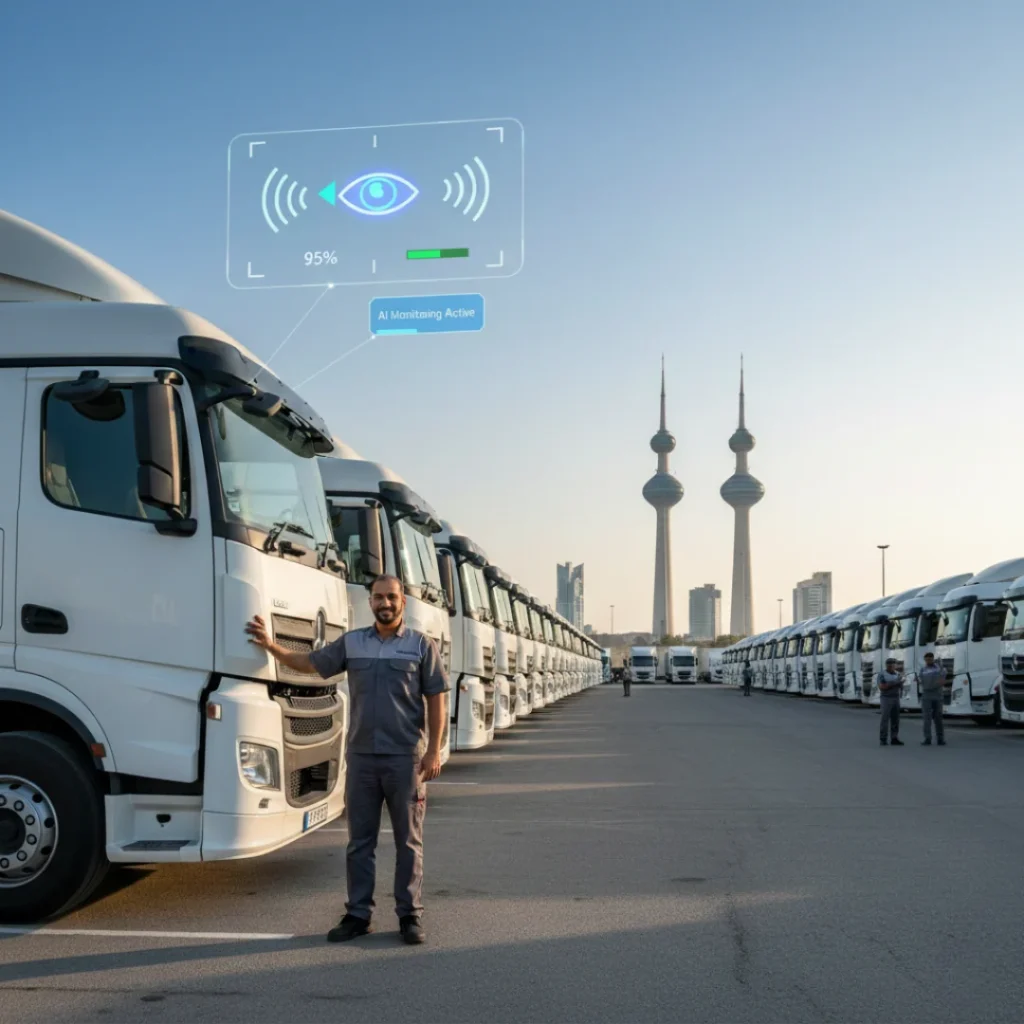
Drowsy driving poses a critical safety challenge for Kuwait’s transportation industry, causing thousands of preventable accidents annually. An Advanced Driver Fatigue Detection system in Kuwait offers fleet managers a proactive solution to combat this growing concern. These intelligent systems monitor driver alertness in real-time, providing instant warnings when signs of fatigue emerge. As businesses prioritize safety and regulatory compliance, implementing fatigue detection technology has become essential for protecting drivers, reducing operational costs, and maintaining fleet efficiency across Kuwait’s demanding road conditions.
Key Takeaways
- Real-time fatigue monitoring: Advanced systems detect drowsiness through eye tracking, head position analysis, and behavioral patterns, alerting drivers before accidents occur.
- Significant cost reduction: Preventing fatigue-related accidents reduces vehicle damage, insurance premiums, downtime, and potential legal liabilities for fleet operators.
- Regulatory compliance: Fatigue detection systems help Kuwait fleets meet evolving safety standards while demonstrating commitment to driver welfare and road safety.
Understanding Driver Fatigue and Its Impact on Fleet Operations
Driver fatigue occurs when physical or mental exhaustion impairs a person’s ability to operate vehicles safely, reducing reaction times and decision-making capabilities significantly.
Driver fatigue remains one of the most dangerous yet preventable causes of traffic accidents in Kuwait’s commercial transportation sector. Studies indicate that drowsy driving impairs performance similarly to alcohol intoxication, with drivers experiencing reduced attention spans, delayed reactions, and impaired judgment. For fleet operators managing multiple vehicles across long routes, the financial and human costs are substantial. Fatigue-related incidents result in vehicle damage, cargo loss, increased insurance costs, and potential legal liabilities. More critically, these accidents endanger driver lives and public safety. Kuwait’s hot climate further exacerbates fatigue risks, as extreme temperatures increase physical strain on drivers during extended shifts. The Safari Fleet Management System helps companies address these challenges through comprehensive monitoring solutions that prioritize both safety and operational efficiency.
How Advanced Driver Fatigue Detection Systems Work
These sophisticated systems combine artificial intelligence, computer vision, and sensor technology to continuously assess driver alertness and behavioral patterns throughout journeys.
An Advanced Driver Fatigue Detection system in Kuwait utilizes cutting-edge technology to monitor driver behavior continuously. The system employs cameras positioned to track facial features, focusing on eye movement, blink frequency, and eyelid closure duration. Advanced algorithms analyze head position, detecting nodding or tilting that indicates drowsiness. When the system identifies fatigue indicators—such as prolonged eye closure, frequent yawning, or erratic steering patterns—it triggers immediate alerts through audible alarms, seat vibrations, or dashboard warnings. Some systems integrate with vehicle controls to suggest rest breaks or even gradually reduce speed in critical situations. The AI Driver Monitoring System in Kuwait learns individual driver patterns over time, improving accuracy and reducing false alarms. According to the National Highway Traffic Safety Administration, such technologies can reduce drowsy driving incidents by up to 20%. Integration with Advanced Fatigue & Distraction Detection Systems provides comprehensive safety coverage for modern fleets.
Key Benefits for Kuwait’s Fleet Management Industry
Implementing fatigue detection technology delivers measurable improvements in safety metrics, operational costs, and overall fleet performance across diverse transportation operations.
Kuwait’s fleet operators gain substantial advantages by implementing an In-Vehicle Monitoring System in Kuwait focused on fatigue detection. First, accident prevention directly reduces costs associated with vehicle repairs, medical claims, and insurance premiums. Research shows companies implementing these systems experience 15-30% reductions in accident rates within the first year. Second, improved driver safety enhances company reputation and aids in attracting quality drivers who value workplace safety. Third, real-time data collection provides fleet managers with actionable insights into driver behavior patterns, route challenges, and schedule optimization opportunities. Fourth, compliance with emerging safety regulations becomes streamlined, protecting companies from penalties and legal exposure. Fifth, driver satisfaction improves when employees recognize their employer’s investment in their wellbeing. Companies utilizing comprehensive fleet safety technologies report significant improvements in retention rates and operational efficiency. For logistics companies operating 24/7 schedules, these benefits translate to sustainable competitive advantages in Kuwait’s demanding market.
Implementation Considerations for Kuwait Businesses
Successful deployment requires careful planning around technology selection, driver training, policy development, and integration with existing fleet management infrastructure.
When implementing an Advanced Driver Fatigue Detection system in Kuwait, fleet managers must consider several critical factors. System compatibility with existing vehicle types and fleet management platforms ensures seamless integration. Evaluate whether the solution supports multiple camera angles for various vehicle configurations, from sedans to heavy trucks. Consider environmental factors unique to Kuwait, including extreme heat, sandstorms, and bright sunlight, which can affect camera performance. Driver acceptance is crucial—transparent communication about system purposes and benefits prevents resistance and ensures cooperation. Establish clear policies regarding alert responses, rest break protocols, and data usage. Training programs should educate drivers on system operation, interpretation of warnings, and proper rest practices. Budget considerations include initial hardware costs, installation expenses, ongoing software subscriptions, and maintenance requirements. Choose vendors offering local support and Arabic language options. Pilot programs with a small vehicle subset allow refinement before full-scale deployment. Companies exploring advanced camera systems for safety can leverage similar implementation strategies across their operations.
Real-World Applications and Success Stories
Transportation companies across Kuwait are experiencing transformative safety improvements and operational benefits through strategic implementation of fatigue detection technology.
Several Kuwait-based fleet operators have achieved remarkable results with AI Driver Monitoring Systems in Kuwait. A logistics company managing 80 delivery trucks reported a 42% reduction in fatigue-related incidents within six months of implementation, translating to annual savings exceeding KD 120,000 in accident costs alone. A construction materials transporter reduced insurance premiums by 18% after demonstrating improved safety records directly attributable to fatigue detection technology. The system’s real-time alerts proved particularly valuable during summer months when temperatures exceed 45°C, prompting timely rest breaks that prevented heat-related fatigue incidents. A passenger transport operator noted that driver satisfaction scores improved significantly as employees appreciated the company’s proactive approach to their safety and wellbeing. Fleet managers particularly value the detailed reporting capabilities, which identify high-risk routes, optimal shift durations, and drivers requiring additional training or support. These success stories demonstrate that investing in proper safety technology yields returns far exceeding initial costs while building stronger safety cultures within organizations.
Conclusion
As Kuwait’s transportation industry continues evolving, implementing an Advanced Driver Fatigue Detection system in Kuwait represents a strategic investment in safety, efficiency, and long-term sustainability. These technologies offer proven solutions to one of the industry’s most persistent challenges—drowsy driving—by providing real-time monitoring and intervention capabilities. The benefits extend beyond accident prevention to include reduced operational costs, improved regulatory compliance, enhanced driver satisfaction, and strengthened corporate reputation. For fleet managers seeking comprehensive solutions, integrating fatigue detection with broader fleet management systems creates synergies that maximize safety outcomes and operational intelligence. TechBiz Solutions understands the unique challenges facing Kuwait’s fleet operators and offers proven technology solutions tailored to local conditions. Contact us today to learn how our advanced monitoring systems can transform your fleet safety program and protect your most valuable assets—your drivers.
Frequently Asked Questions
An Advanced Driver Fatigue Detection system is intelligent technology that monitors driver alertness using cameras and sensors. It tracks eye movements, blink rates, head position, and steering patterns. When fatigue signs appear, the system triggers immediate alerts to prevent drowsy driving accidents and enhance road safety.
Modern systems are designed for extreme temperatures, using heat-resistant components and adaptive algorithms. They monitor facial features through infrared cameras that function effectively in bright sunlight and sandstorms. The technology accounts for environmental factors while maintaining accurate fatigue detection throughout Kuwait’s challenging weather conditions year-round.
Yes, research shows fatigue detection systems reduce accident rates by 15-30% within the first year of implementation. They provide real-time warnings before drowsiness causes incidents, allowing drivers to take preventive action. Organizations using comprehensive digital solutions report even greater safety improvements across their operations.
Systems monitor multiple fatigue indicators including prolonged eye closure, reduced blink frequency, frequent yawning, head nodding, and lane deviation patterns. Advanced AI algorithms analyze these behaviors continuously, distinguishing between normal actions and dangerous drowsiness. The technology adapts to individual driver patterns for improved accuracy and fewer false alarms.
While not currently mandatory for all vehicles, Kuwait’s regulatory environment increasingly emphasizes fleet safety technologies. Many commercial operators voluntarily implement these systems to meet insurance requirements, demonstrate safety commitment, and prevent accidents. Adopting safety training platforms alongside monitoring technology strengthens compliance and operational standards.
Implementation costs vary based on fleet size, vehicle types, and feature complexity, typically ranging from KD 150-400 per vehicle for hardware and installation. Monthly subscription fees for software and data management range from KD 10-30 per vehicle. However, accident prevention savings usually recover these investments within 12-18 months through reduced insurance and repair costs.
Driver acceptance increases significantly with transparent communication about safety benefits rather than surveillance purposes. When companies emphasize protecting driver wellbeing and provide proper training, resistance diminishes. Most drivers appreciate employers investing in their safety, especially when systems prevent dangerous situations they might not recognize independently.
Modern systems offer seamless integration with popular fleet management platforms through APIs and standard communication protocols. They share data with GPS tracking, route optimization, and maintenance systems, creating comprehensive operational intelligence. Integration with communication platforms enables real-time fleet-wide safety alerts and performance monitoring.
Upon detecting fatigue indicators, systems trigger progressive alerts starting with visual dashboard warnings, followed by audible alarms and seat vibrations. Advanced systems notify fleet managers simultaneously, enabling intervention. Some solutions suggest nearest rest areas or automatically adjust navigation to include break stops, ensuring drivers receive adequate rest before continuing journeys.
Modern AI-driven systems achieve 85-95% accuracy in detecting genuine fatigue while minimizing false alarms. Machine learning algorithms improve over time by learning individual driver behaviors and environmental conditions. Systems combining multiple detection methods—facial recognition, steering analysis, and vehicle dynamics—provide the highest accuracy levels for reliable safety performance.