
Introduction
The driver monitoring system in kuwait is transforming how businesses approach vehicle safety and operational efficiency. With Kuwait’s rapidly expanding commercial transport sector and increasing road traffic, companies face mounting pressure to protect their drivers, vehicles, and bottom line. Advanced driver monitoring technologies now offer real-time insights into driver behavior, fatigue levels, and potential safety risks. These systems don’t just record incidents—they prevent them. For fleet operators across Kuwait, implementing these solutions means fewer accidents, lower insurance costs, and improved driver accountability.
Key Takeaways
- Driver monitoring systems use AI-powered cameras and sensors to track driver behavior in real-time, detecting fatigue, distraction, and risky driving patterns before accidents occur
- Fleet safety Kuwait initiatives are increasingly adopting these technologies to reduce accident rates by up to 60% and improve overall operational efficiency
- Real-time alerts and detailed analytics help fleet managers make data-driven decisions about driver training, route optimization, and vehicle maintenance scheduling
Understanding Driver Monitoring Systems in Kuwait’s Context
Kuwait’s unique driving conditions—from extreme heat to heavy commercial traffic—make driver monitoring systems essential for businesses operating fleet vehicles in challenging environments.
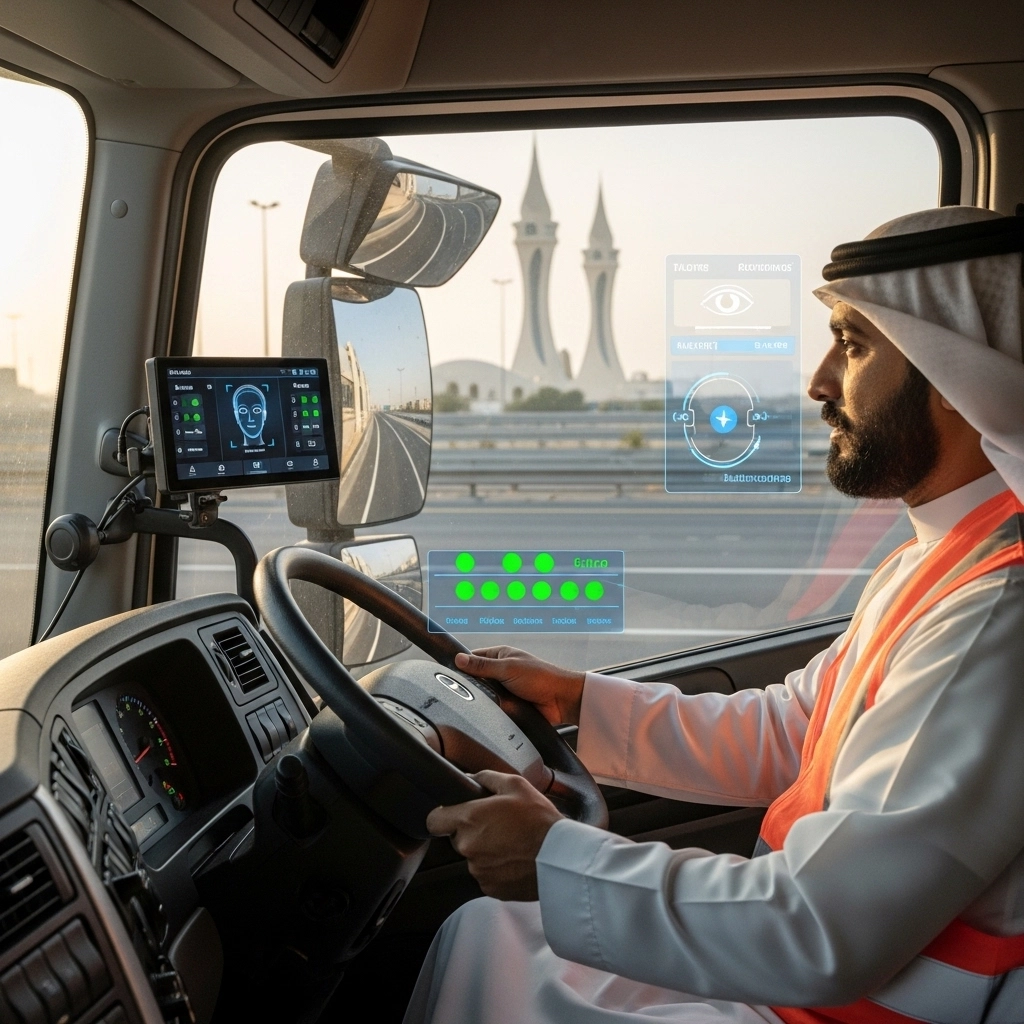
Kuwait presents specific challenges for fleet operations. Summer temperatures exceeding 50°C can accelerate driver fatigue, while congested highways and construction zones demand constant attention. A driver monitoring system in kuwait addresses these local challenges by continuously tracking driver alertness and behavior. These systems use cabin-mounted cameras equipped with artificial intelligence to monitor eye movement, head position, and facial expressions. When the system detects signs of drowsiness, distraction, or dangerous behavior like using a mobile phone, it triggers immediate audio-visual alerts. This technology is particularly valuable for companies managing logistics, delivery services, construction equipment, and passenger transport. The integration of such systems helps businesses comply with Kuwait’s evolving road safety regulations while demonstrating commitment to employee welfare. For organizations already using Safari Fleet Management System, driver monitoring capabilities seamlessly integrate with existing GPS tracking and vehicle diagnostics.
Key Technologies Behind Driver Behavior Monitoring
Modern driver behavior monitoring combines computer vision, machine learning algorithms, and IoT connectivity to create comprehensive safety ecosystems that protect drivers and reduce operational risks.
The technology powering driver monitoring has advanced significantly. At its core, driver behavior monitoring relies on high-resolution cameras paired with edge computing devices that process data in real-time. Machine learning algorithms analyze facial landmarks to detect microsleep episodes, yawning patterns, and distraction indicators with over 95% accuracy. These systems also incorporate accelerometers and gyroscopes to track harsh braking, rapid acceleration, and aggressive cornering—behaviors that increase accident risk and vehicle wear. Advanced solutions include fatigue and distraction detection systems that differentiate between temporary glances and sustained inattention. The data collected flows to cloud-based dashboards where fleet managers access detailed reports, trend analysis, and predictive insights. Some systems even integrate with ADAS (Advanced Driver Assistance Systems) to provide collision warnings and lane departure alerts. The investment in these technologies typically pays for itself within 12-18 months through reduced accidents, lower insurance premiums, and improved fuel efficiency from better driving habits.
Improving Fleet Safety Kuwait Through Real-Time Monitoring
Real-time monitoring capabilities enable immediate intervention during unsafe driving situations, transforming fleet safety Kuwait operations from reactive incident management to proactive risk prevention.
Fleet safety Kuwait organizations are experiencing measurable improvements through real-time monitoring implementations. When a driver exhibits dangerous behavior, the system doesn’t wait for an accident report—it intervenes immediately with cabin alerts. Fleet managers receive instant notifications via mobile apps, allowing them to contact drivers, adjust routes, or mandate rest breaks. This immediate feedback loop creates accountability and encourages safer driving habits. Studies show that fleets using active monitoring systems experience 40-60% fewer accidents within the first year. The technology also proves valuable during extreme weather events common in Kuwait, such as sandstorms that reduce visibility. Enhanced monitoring during these conditions helps prevent multi-vehicle accidents on highways. Additionally, comprehensive safety solutions like blind spot monitoring and 360° vision systems complement driver monitoring by eliminating vehicle blind spots. Integration with existing fleet management platforms creates a unified view of vehicle health, driver performance, and route efficiency—all critical components of modern fleet operations.
Benefits of Implementing Driver Monitoring Systems
Organizations implementing driver monitoring systems experience significant returns through accident reduction, insurance savings, improved driver behavior, enhanced operational efficiency, and stronger regulatory compliance.
The benefits extend across multiple operational areas. First, accident prevention: Real-time alerts reduce collision rates by identifying and correcting dangerous behaviors before they cause incidents. Companies report up to 70% reduction in at-fault accidents after system implementation. Second, cost savings: Lower accident rates translate directly to reduced insurance premiums, with some fleets saving 20-30% annually. Reduced vehicle downtime and repair costs add further savings. Third, driver improvement: Objective performance data enables targeted coaching rather than blanket training programs. Drivers who initially scored poorly often show dramatic improvement within weeks when provided with specific feedback. Fourth, legal protection: Video evidence from driver monitoring systems proves invaluable in disputed liability cases, protecting companies from fraudulent claims. Fifth, operational insights: Analytics reveal patterns like which routes cause most fatigue or which time periods see most incidents. These insights inform scheduling decisions and route planning. For businesses operating heavy equipment, advanced camera systems for forklifts and cranes provide similar monitoring benefits in warehouse and construction environments.
How TechBiz Solutions Supports Fleet Safety in Kuwait
TechBiz Solutions delivers comprehensive fleet safety technology tailored to Kuwait’s business environment, combining driver monitoring systems with integrated platforms that address the complete spectrum of fleet management challenges.
As a Kuwait-based technology provider since 2007, TechBiz Solutions understands local operational challenges. Our approach to driver monitoring system in kuwait implementations goes beyond hardware installation. We provide customized solutions that integrate with your existing fleet infrastructure, whether you operate five vehicles or five hundred. Our team handles complete deployment—from initial assessment and system design to installation, driver training, and ongoing support. We ensure drivers understand the technology isn’t about surveillance but safety enhancement and performance improvement. The systems we implement offer Arabic and English interfaces suitable for Kuwait’s multilingual workforce. Our digital solutions portfolio includes comprehensive fleet management platforms that unify driver monitoring with GPS tracking, maintenance scheduling, fuel management, and compliance reporting. This integration provides fleet managers with a single dashboard for all operational metrics. We also offer scalable solutions that grow with your business, starting with core monitoring features and expanding to include predictive analytics and AI-powered coaching recommendations as your needs evolve.
Conclusion
The driver monitoring system in kuwait represents more than just another technology upgrade—it’s a fundamental shift in how businesses approach fleet safety and driver management. As Kuwait continues developing its infrastructure and commercial sectors, the pressure to operate safely and efficiently only increases. Companies that adopt these systems position themselves ahead of competitors while demonstrating genuine commitment to employee welfare and public safety. The technology has matured beyond early adoption risks, offering reliable, proven solutions with clear ROI. Whether you manage a small delivery fleet or extensive logistics operations, driver monitoring systems deliver measurable improvements in safety metrics, operational costs, and driver performance. For fleet safety Kuwait organizations ready to make this transition, partnering with experienced local providers ensures smooth implementation tailored to your specific needs. The question isn’t whether to implement driver monitoring, but when to start realizing these benefits for your operation.
Frequently Asked Questions
A driver monitoring system uses AI-powered cameras and sensors to track driver behavior in real-time. The system analyzes facial expressions, eye movements, and head position to detect signs of fatigue, distraction, or unsafe driving. When risky behavior is identified, it triggers immediate alerts to help prevent accidents.
Driver monitoring system costs in Kuwait typically range from KD 150-400 per vehicle, depending on features and fleet size. Implementation includes hardware, installation, software licensing, and training. Most businesses see ROI within 12-18 months through accident reduction and lower insurance premiums.
Yes, many insurance providers in Kuwait offer 10-30% premium reductions for fleets using certified driver monitoring systems. The technology demonstrates proactive risk management and provides documented evidence of safety investments, making fleets more attractive to insurers while reducing claim frequencies.
Driver monitoring systems detect fatigue indicators like yawning and eye closure, distraction behaviors including phone use and looking away from the road, aggressive driving patterns such as harsh braking and rapid acceleration, and seatbelt non-compliance. Advanced systems also identify smoking and eating while driving.
Yes, driver monitoring systems are legal in Kuwait for commercial fleet applications. However, businesses must comply with data protection regulations and inform drivers about monitoring. Systems should focus on safety-related behaviors rather than constant surveillance, with clear policies governing data usage and privacy.
Driver monitoring systems improve performance through immediate feedback during unsafe behaviors, detailed performance reports that identify improvement areas, objective data for targeted coaching sessions, and gamification features that encourage safe driving competition. Drivers typically show 30-50% improvement in safety scores within three months.
Most modern driver monitoring systems offer integration capabilities with popular fleet management platforms through APIs and standardized protocols. This integration enables unified dashboards combining driver behavior data with GPS tracking, maintenance schedules, and fuel consumption for comprehensive fleet oversight and reporting.
Driver monitoring systems actively analyze driver behavior using AI to prevent accidents through real-time alerts, while dash cameras primarily record road events for post-incident review. Driver monitoring focuses on the driver’s state and actions, whereas dash cameras capture external road conditions and collisions.
Implementation timelines vary by fleet size. Small fleets (5-20 vehicles) typically complete installation within 1-2 weeks, while larger fleets require 4-8 weeks for phased rollout. The process includes hardware installation, software configuration, driver training sessions, and system testing before full operational deployment.
Quality driver monitoring systems are designed to operate in temperatures from -20°C to +70°C, making them suitable for Kuwait’s climate. Systems use industrial-grade components with thermal management features. Regular maintenance ensures optimal performance during summer months when cabin temperatures can exceed 50°C.