
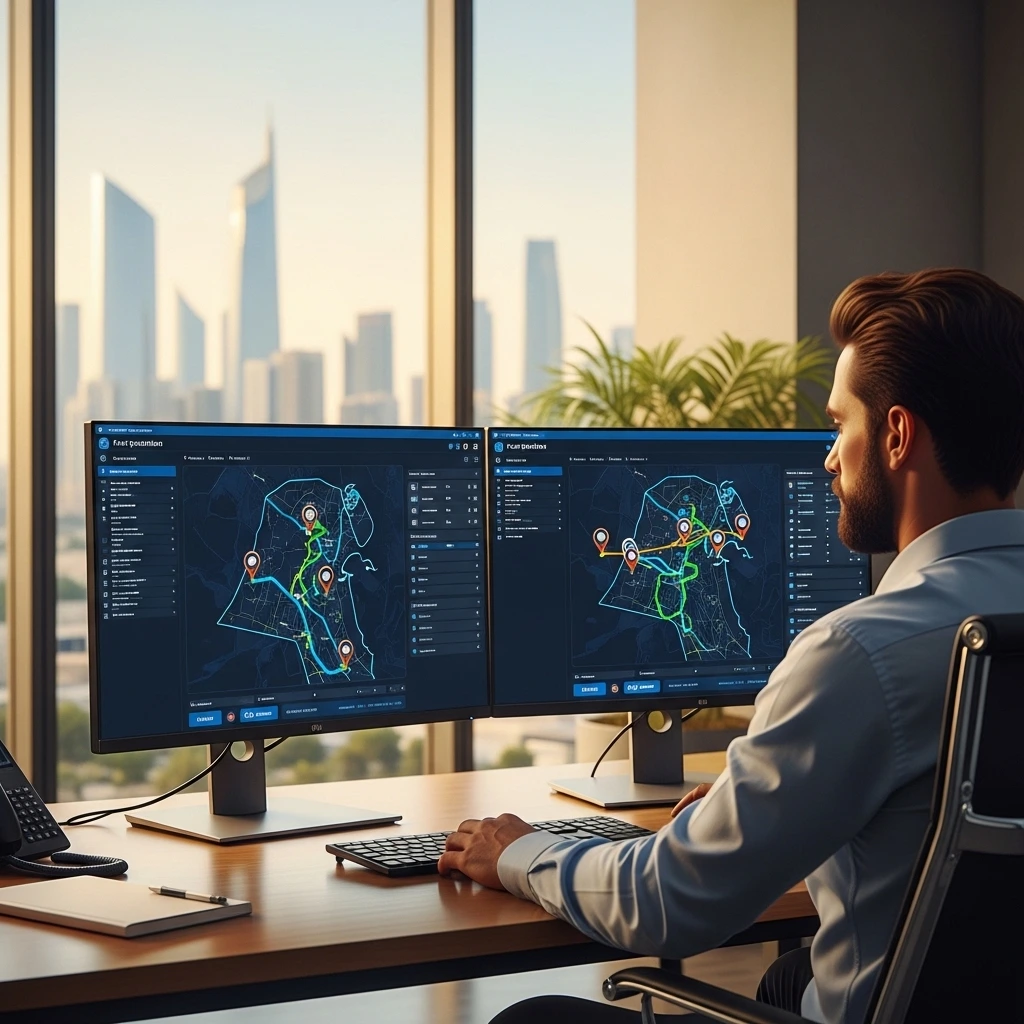
Introduction
Managing a fleet of vehicles without real-time data is like navigating Kuwait’s busy roads without a map. Delays, missed deliveries, rising fuel costs — these problems quietly drain business efficiency. Real-time fleet management in Kuwait is changing that story. Modern systems give operations managers live insight into every vehicle, every route, and every driver — at any moment of the day. In this blog, you will learn how live vehicle tracking and smart fleet monitoring tools are helping Kuwait businesses cut costs, improve safety, and gain a competitive edge.
Key Takeaways
- Real-time fleet management in Kuwait gives businesses instant visibility into vehicle locations, speeds, and driver behaviour — eliminating operational blind spots.
- Live vehicle tracking reduces fuel waste, prevents unauthorised vehicle use, and accelerates delivery timelines by enabling smarter route planning.
- Fleet monitoring Kuwait solutions help businesses meet compliance requirements, improve driver safety, and build data-driven operational strategies.
What Is Real-Time Fleet Management and Why Does It Matter?
Real-time fleet management is a digital system that tracks, monitors, and manages vehicles as they move — providing instant data that businesses can act on immediately.
Unlike traditional fleet oversight — which relied on phone calls, paper logs, or end-of-day reports — real-time systems use GPS, telematics sensors, and cloud software to push live updates to a central dashboard. Fleet managers can see precisely where every vehicle is, how fast it is travelling, whether the engine is idling, and how a driver is behaving on the road.
For Kuwait businesses operating in logistics, construction, retail delivery, or government transport, that level of control directly translates into money saved and service improved. According to the Grand View Research fleet management market report, the global fleet management market is projected to grow at over 15% annually through 2030 — driven largely by demand for real-time visibility and driver safety technology.
The shift is no longer optional. Businesses that lack real-time fleet management increasingly struggle to compete with peers that can guarantee accurate ETAs, prove compliance, and respond instantly to breakdowns or route disruptions.
How Live Vehicle Tracking Improves Operational Efficiency
Live vehicle tracking turns raw location data into actionable decisions that save time, reduce costs, and improve customer service.
When a dispatcher can see every vehicle on a live map, they can assign the nearest driver to a new job, reroute around traffic congestion on Sheikh Jaber Causeway, or identify a vehicle that has been idling for 40 minutes in a loading bay. These small interventions compound into significant savings across weeks and months.
Key Statistics
| Metric | Impact |
| Fuel cost reduction | ~20% with live route optimisation |
| Unauthorised vehicle usage | ~30% reduction after GPS deployment |
| On-time delivery improvement | ~15% for tracked fleets |
Live vehicle tracking also creates accountability. Drivers who know their routes and habits are being monitored tend to maintain safer speeds, take approved routes, and avoid personal errands during working hours. This improvement in driver discipline has a measurable knock-on effect on vehicle maintenance costs — vehicles driven responsibly last longer and require fewer emergency repairs.
Beyond efficiency, live tracking integrates directly with advanced safety systems. Features such as blind spot monitoring and 360° vision systems layer real-time alerts on top of location data, giving fleet managers a complete picture of vehicle and driver safety at all times.
Managers can also configure geo-fencing — virtual boundaries on the map. If a vehicle enters or exits a restricted zone outside of scheduled hours, the system triggers an immediate alert. This is particularly valuable for businesses protecting high-value assets or managing deliveries across Kuwait’s industrial zones.
Fleet Monitoring in Kuwait: Local Challenges and Opportunities
Kuwait’s unique geography, traffic patterns, and regulatory environment make dedicated fleet monitoring solutions essential for local businesses.
Kuwait’s road infrastructure has grown rapidly, but so has vehicle density. The Kuwait City ring roads and arterial highways that connect Fahaheel, Shuwaikh, and Jahra see high volumes of commercial traffic daily. Without fleet monitoring Kuwait-specific tools, businesses cannot reliably predict transit times or respond to congestion in real time.
Kuwait’s intense summer heat also puts vehicles at serious mechanical risk. Telematics sensors embedded in modern fleet management systems can monitor engine temperature, oil pressure, and battery health — flagging maintenance needs before a vehicle breaks down in the field. This preventative approach is far cheaper than reactive repairs and keeps fleets operational during Kuwait’s peak demand seasons.
Driver fatigue is another real challenge, especially in fleets operating extended hours across Kuwait’s industrial and logistics sectors. Pairing fleet monitoring with advanced fatigue and distraction detection systems allows businesses to receive real-time alerts when a driver shows signs of drowsiness — preventing accidents before they happen.
The commercial opportunity is equally significant. Businesses with transparent, data-backed fleet operations are better positioned to win government tenders, satisfy enterprise-level clients who demand service-level guarantees, and negotiate lower insurance premiums by demonstrating a strong safety record.
Key Features to Look for in a Fleet Management System
Not all fleet management software is equal. The right system should combine live tracking, reporting, safety alerts, and ease of use into one integrated platform.
When evaluating a solution for your business, prioritise features that solve your specific operational problems — not just the largest list of functions. A logistics company with 50 vehicles has different needs from a school transport operator with 15 buses. The best systems are configurable.
Below are the core capabilities any fleet management system should deliver:
- ✅ Real-time GPS tracking with sub-minute update intervals
- ✅ Geofencing with instant entry/exit alerts via SMS or app
- ✅ Driver behaviour monitoring (speed, harsh braking, cornering)
- ✅ Preventative maintenance scheduling based on mileage or engine hours
- ✅ Fuel consumption tracking and idle time reporting
- ✅ Trip history and route replay for audit and compliance
- ✅ Integration with driver safety systems (cameras, fatigue alerts)
- ✅ Mobile-friendly dashboard accessible from any device
You can explore how GPS-based tracking delivers these benefits in practice through TechBiz’s detailed guide on fleet GPS tracking for safety and efficiency. Understanding the technology behind the system helps you ask the right questions when comparing vendors.
Cloud-based platforms are increasingly preferred because they eliminate the need for on-premise servers, reduce IT overhead, and enable your team to access fleet data from the office, the warehouse, or a mobile device anywhere in Kuwait. According to McKinsey’s operational efficiency research, organisations that digitise their operational monitoring see an average 15–25% improvement in overall productivity within the first year.
How TechBiz Solutions Supports Fleet Management in Kuwait
TechBiz Solutions provides a purpose-built fleet management platform designed for the operational realities of Kuwaiti businesses — with local support and scalable technology.
The Safari Fleet Management System by TechBiz Solutions is built to give Kuwait businesses full control over their vehicle operations. It delivers real-time GPS tracking, driver behaviour analysis, route history, fuel reporting, and maintenance alerts — all from a single, intuitive dashboard. The system is designed to be user-friendly, so your operations team can get actionable insights without needing specialist IT skills.
TechBiz Solutions has been helping Kuwait businesses adopt technology since 2007. That local experience matters. The team understands Kuwait’s business culture, compliance requirements, and the practical demands of operating fleets in a Gulf climate. Solutions are configured to match your fleet size, industry, and reporting needs — not forced into a generic mould.
Whether you manage a delivery fleet, a corporate car pool, a construction vehicle operation, or a school transport service, Safari Fleet gives you the visibility and control to run your operation efficiently, safely, and cost-effectively.
Conclusion
Real-time fleet management in Kuwait is no longer a luxury — it is a business necessity. Live vehicle tracking eliminates guesswork, reduces operating costs, and keeps drivers safer on the road. Fleet monitoring Kuwait solutions give operations managers the data they need to make better decisions, faster. As Kuwait’s transportation sector becomes more competitive, businesses that invest in the right fleet technology today will be the ones leading tomorrow. If you are ready to take control of your fleet and improve your operational efficiency, contact TechBiz Solutions to learn how Safari Fleet can work for your business.
Ready to Transform Your Fleet Operations? Discover how Safari Fleet Management System gives your business real-time visibility, driver safety, and operational control — built for Kuwait. Get in Touch Today →
Frequently Asked Questions
Real-time fleet management in Kuwait uses GPS and telematics to track vehicles continuously. Managers get live data on location, speed, and driver behaviour — enabling faster decisions, lower fuel costs, and safer fleet operations across Kuwait’s road network.
Live vehicle tracking identifies idle engines, inefficient routes, and unnecessary detours in real time. Fleet managers can act immediately to correct these issues, with businesses typically achieving a 15–20% reduction in fuel spend within months of deployment.
Fleet monitoring in Kuwait delivers the most value to logistics, retail delivery, construction, school transport, and oil and gas sectors. Businesses across these industries in Kuwait see measurable gains in cost control, driver accountability, and on-time performance after deployment.
Geofencing creates virtual boundaries on a digital map around specific locations such as depots, delivery zones, or restricted areas. When a vehicle crosses a boundary outside scheduled hours, the system instantly alerts the fleet manager via SMS or app notification.
Yes. Fleet management platforms track mileage, engine hours, and sensor data to predict maintenance needs before failures occur. Managers receive automated service reminders, reducing emergency repairs and preventing downtime — especially valuable during Kuwait’s intense summer operating conditions.
Yes. Modern fleet management systems are scalable for small businesses. Even fleets of three to five vehicles generate fuel savings and efficiency gains that offset monthly costs, with most Kuwait businesses achieving a return on investment within six months.
Driver behaviour monitoring uses telematics sensors to detect speeding, harsh braking, rapid acceleration, and sharp cornering. The system logs each event and alerts the fleet manager in real time, helping businesses coach drivers, reduce accident risk, and lower insurance premiums.
GPS tracking shows vehicle location only. Full fleet management in Kuwait combines live vehicle tracking with driver behaviour analysis, fuel monitoring, maintenance scheduling, and compliance reporting — transforming raw location data into actionable operational intelligence for better business decisions.
Fleet monitoring Kuwait systems generate trip logs, route history, and driver records that satisfy regulatory and client audit requirements. Businesses can demonstrate that vehicles operated within approved zones and schedules — reducing legal exposure and strengthening credibility with enterprise clients.
TechBiz Solutions has supported Kuwait businesses with technology since 2007. With deep knowledge of Kuwait’s roads, climate, and industry needs, their locally based technology team configures fleet management systems to match each client’s specific operational size and requirements.