
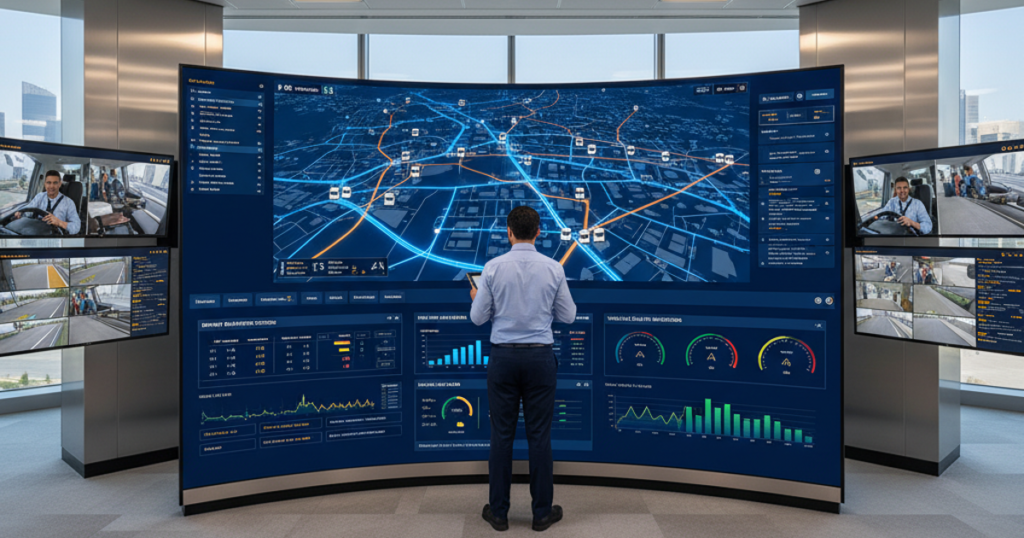
In-vehicle monitoring system in Kuwait adoption is accelerating as businesses face growing pressure to manage fleets more safely and efficiently. Whether you run a logistics company, a government transport division, or a corporate vehicle pool, having real-time visibility into driver behavior and vehicle performance is no longer optional. This blog explains what an in-vehicle monitoring system is, how it works, what features matter most, and why Kuwaiti fleet operators are making it a core part of their operations strategy.
Key Takeaways
- An in-vehicle monitoring system in Kuwait gives fleet managers real-time data on driver behavior, vehicle location, and trip history.
- Combining a vehicle tracking system in Kuwait with driver monitoring reduces accidents, fuel waste, and unauthorized vehicle use.
- A remote driver monitoring system in Kuwait allows supervisors to oversee drivers across multiple sites without being physically present.
What Is an In-Vehicle Monitoring System?
An in-vehicle monitoring system (IVMS) is a hardware and software solution installed inside vehicles to track, record, and report on vehicle activity and driver behavior in real time. It captures data points such as speed, harsh braking, acceleration patterns, idling time, GPS location, and engine diagnostics.
The system sends this data to a central platform that fleet managers can access from a desktop or mobile device. This allows businesses to monitor their entire fleet from one dashboard without needing to be on the road. To understand how this technology has evolved in the Kuwaiti market, the in-vehicle monitoring system in Kuwait guide from TechBiz Solutions provides a strong starting point.
Modern IVMS solutions go beyond basic GPS. They integrate video, AI-driven alerts, and behavioral analytics to give fleet operators a complete picture of what is happening inside and around every vehicle in their fleet.
How a Vehicle Tracking System in Kuwait Fits Into Fleet Operations
A vehicle tracking system in Kuwait is one of the core components of any IVMS deployment. It provides continuous GPS-based location data so dispatchers and fleet managers always know where each vehicle is, where it has been, and how long it stayed at each stop.
This capability has direct operational benefits. Dispatchers can assign the closest available vehicle to a new job. Managers can verify that drivers followed approved routes. Businesses can generate trip history reports for billing, compliance audits, or insurance purposes. According to the International Finance Corporation, technology-driven fleet management practices in emerging markets can reduce operational costs by up to 20 percent through better route planning and reduced fuel consumption.
In Kuwait, where summer heat places additional strain on vehicles and traffic congestion is a daily challenge, real-time tracking also helps dispatchers reroute drivers around bottlenecks quickly. For a broader view of how GPS-based fleet tools work across Kuwaiti operations, the GPS fleet management Kuwait complete guide covers the key systems and strategies in detail.
What a Remote Driver Monitoring System in Kuwait Can Detect
A remote driver monitoring system in Kuwait uses AI-powered cameras and sensor technology to observe driver behavior continuously during trips. This is where modern IVMS technology separates itself from older GPS-only trackers.
These systems can detect and alert managers to a wide range of risky behaviors, including:
- Driver fatigue or drowsiness based on eye movement and head position analysis
- Distracted driving, such as mobile phone use or looking away from the road
- Seatbelt non-compliance
- Harsh braking, rapid acceleration, and aggressive cornering
- Speeding above preset thresholds
- Unauthorized stops or deviations from assigned routes
When any of these events are detected, the system can send an immediate in-cab alert to the driver and simultaneously notify the fleet manager through the central platform. This two-way response is what makes remote monitoring genuinely effective rather than simply recording incidents after they happen.
To explore how AI-powered monitoring specifically reduces driver distraction in Kuwait’s operating environment, the driver distraction detection system in Kuwait article offers detailed insight into what these tools can identify and prevent.
Key Features to Look for in an IVMS Solution
Not all in-vehicle monitoring systems are built the same. Businesses in Kuwait should evaluate solutions based on the specific challenges their fleet faces. The following features are most important for organizations that want measurable results from their investment.
Real-Time GPS Tracking and Geofencing
Real-time GPS tracking shows vehicle location with minimal delay, which is essential for dispatching and route management. Geofencing adds an extra layer of control by triggering automatic alerts when a vehicle enters or leaves a defined geographic boundary. This is particularly useful for businesses that want to prevent unauthorized vehicle use outside of working hours or approved zones.
AI-Powered Driver Behavior Scoring
Driver scoring systems assign each driver a performance rating based on behaviors like speeding, braking, and idle time. Fleet managers can use these scores to identify which drivers need coaching and which are performing well. Recognizing good driving behavior can also improve morale and reduce driver turnover, which is a significant operational cost for many Kuwaiti fleet businesses.
Video Telematics and Event Recording
Camera-equipped IVMS units record footage tied to triggered events, such as a harsh braking incident or a collision. This video evidence is invaluable for resolving insurance disputes, investigating accidents, and defending against false claims. Some systems also support live video streaming so managers can view what is happening inside the cab at any given moment.
Maintenance and Engine Diagnostics Alerts
An IVMS connected to a vehicle’s onboard diagnostics port can monitor engine health, fuel consumption, and upcoming maintenance schedules. Automated alerts for oil changes, filter replacements, or fault codes help businesses avoid costly breakdowns and keep vehicles roadworthy. In Kuwait’s extreme heat conditions, proactive maintenance alerts can prevent engine damage that would otherwise result in expensive repairs and downtime.
Why Kuwait Businesses Can No Longer Ignore IVMS Technology
The business case for deploying an in-vehicle monitoring system in Kuwait is built on several converging factors specific to the local operating environment.
First, road safety remains a serious concern. Kuwait has consistently reported high rates of traffic accidents relative to population size, and commercial vehicles are statistically involved in a disproportionate share of serious incidents. IVMS technology directly addresses the behavioral causes of most accidents, including fatigue, distraction, and speeding.
Second, fuel costs represent a major expense for fleet-heavy industries. Idling, aggressive driving, and unauthorized use all consume fuel unnecessarily. Real-time monitoring and driver scoring reduce these behaviors, which translates directly into lower fuel bills.
Third, regulatory and insurance requirements are tightening. Businesses that can demonstrate proactive safety monitoring through IVMS data are better positioned during audits, insurance renewals, and government tender evaluations.
For organizations that want to understand the full commercial argument for these systems, the reasons why Kuwait businesses choose fleet management solutions article outlines the core motivators driving adoption across industries. Additionally, McKinsey and Company research on digital operations in logistics highlights how telematics and monitoring technology consistently deliver positive returns within the first year of deployment when properly implemented.
Conclusion
An in-vehicle monitoring system in Kuwait is no longer a luxury reserved for large enterprise fleets. It is a practical, scalable tool that any business operating vehicles can deploy to improve safety, reduce costs, and maintain operational accountability. From real-time GPS tracking and remote driver monitoring to AI-driven behavior alerts and engine diagnostics, modern IVMS platforms give fleet managers the visibility they need to make better decisions every day. If your business relies on vehicles to deliver services or goods, the question is not whether you need an IVMS. The question is how quickly you can implement one. Reach out to TechBiz Solutions to explore how their fleet technology solutions can be tailored to your specific operational needs in Kuwait.
Frequently Asked Questions
A standard GPS tracker only shows vehicle location. An IVMS solution in Kuwait also monitors driver behavior, engine health, video events, and sends real-time alerts, giving fleet managers far deeper operational insight than location data alone.
It uses AI cameras to detect fatigue, distraction, and risky driving in real time, triggering in-cab alerts and notifying managers instantly. This dual-response approach addresses dangerous behaviors before they result in accidents, reducing fleet incident rates significantly.
Yes. By tracking idling time, speeding, and aggressive acceleration, the system identifies fuel-wasting behaviors. Fleet managers can coach drivers to improve habits, which directly lowers fuel consumption across the fleet and reduces overall operating expenses over time.
Absolutely. Modern IVMS platforms are scalable and can be configured for fleets of any size. Even businesses with five to ten vehicles benefit from real-time tracking, driver scoring, and maintenance alerts, making the investment worthwhile for small operators too.
Geofencing creates a virtual geographic boundary around a defined area. When a vehicle crosses that boundary, the system sends an automatic alert to the fleet manager. This helps prevent unauthorized vehicle use and ensures drivers stay within approved operational zones.
It captures GPS location, speed, braking and acceleration events, idling duration, route history, seatbelt status, engine diagnostics, and in some systems, video footage. This data feeds into real-time fleet management dashboards that give managers a complete operational picture.
Installation time varies by vehicle type and system complexity, but most IVMS units can be professionally installed within a few hours per vehicle. Cloud-based platforms are typically configured and accessible within the same day, minimizing disruption to your fleet operations.
Yes. Video event recordings tied to specific incidents provide clear evidence that helps resolve insurance disputes quickly and accurately. Businesses with documented telematics data are often able to defend against false claims and may qualify for reduced insurance premiums over time.
Logistics, construction, oil and gas, healthcare transport, government fleets, and retail delivery businesses gain the most benefit. Any industry relying on multiple vehicles to deliver services can use fleet management solutions in Kuwait to improve safety and control operating costs.
Yes. Most modern IVMS platforms offer mobile applications or mobile-responsive dashboards. Fleet managers can view live vehicle locations, receive real-time alerts, review driver scores, and access trip history from any smartphone or tablet, regardless of their physical location.