
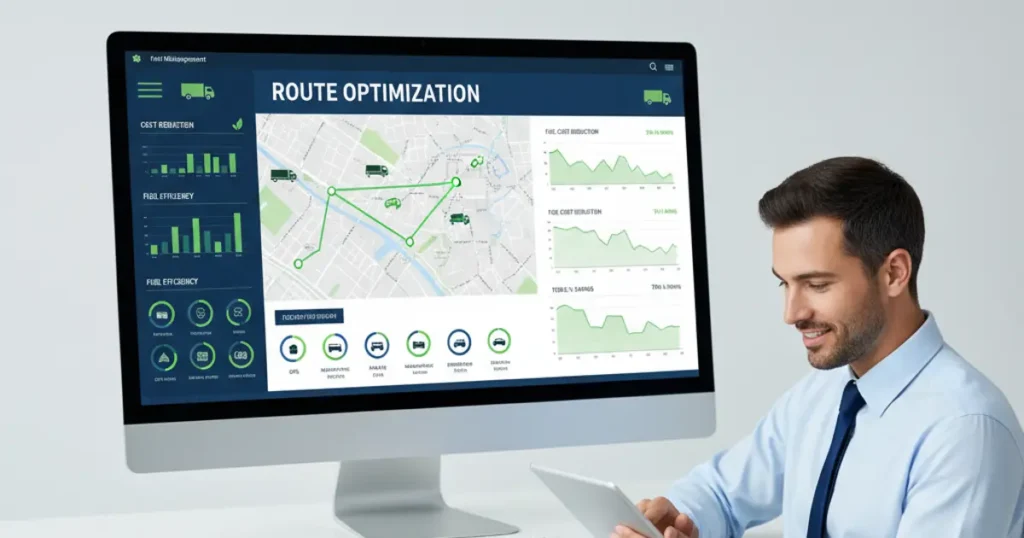
Fuel costs are a major operational burden for businesses running fleets in Kuwait. Rising fuel prices, inefficient routing, and poor driver habits can drain budgets quickly. A vehicle tracking system in Kuwait gives businesses the real-time visibility they need to address these issues directly. In this blog, you will learn how GPS-based tracking, trip data monitoring, and smart fleet management tools can realistically reduce fuel costs by up to 30%.
Key Takeaways
- A vehicle tracking system in Kuwait provides real-time GPS data that helps fleet managers eliminate wasteful routes and reduce unnecessary mileage.
- Integrating a fleet management solution in Kuwait enables businesses to monitor driver behavior, reduce idling, and enforce fuel-saving policies across the entire fleet.
- Using a trip data monitoring system in Kuwait allows managers to analyze historical journey data, identify patterns of fuel waste, and make data-driven decisions.
Why Fuel Efficiency Is a Top Priority for Kuwait Fleets
Kuwait businesses operating logistics, delivery, construction, or field service fleets deal with significant fuel expenditure every month. Unlike smaller costs, fuel is a recurring and largely controllable expense when the right systems are in place. Without proper monitoring, drivers may take longer routes, idle excessively, or drive aggressively, all of which increase fuel consumption significantly.
According to the International Energy Agency, transportation accounts for nearly 37% of global CO2 emissions from fuel combustion, highlighting how fuel inefficiency is both a financial and environmental concern. For Kuwaiti fleet operators, addressing this challenge is not just about saving money. It is about building a sustainable and competitive business.
A well-deployed vehicle tracking system gives fleet managers the data and tools to take control of these costs proactively.
How Real-Time GPS Tracking Reduces Unnecessary Mileage
One of the most direct ways a vehicle tracking system in Kuwait cuts fuel costs is by reducing unnecessary mileage. When managers can see every vehicle on a live map, they can assign the closest available vehicle to a job, avoiding situations where a driver travels across the city when another driver is nearby.
Real-time routing also allows dispatchers to reroute vehicles around traffic congestion or road closures instantly. Sitting in traffic with an engine running wastes fuel without moving goods or serving customers. Smart routing built into modern fleet platforms helps avoid these situations entirely.
Businesses that eliminate even 10% of unnecessary mileage across a fleet of 20 vehicles can see substantial monthly savings. Multiply that over a year, and the financial impact becomes very significant.
Monitoring Driver Behavior to Eliminate Fuel-Wasting Habits
Driver behavior is one of the most overlooked causes of high fuel bills. Harsh acceleration, speeding, sudden braking, and extended idling all consume more fuel than smooth, controlled driving. A fleet management solution in Kuwait that includes driver behavior monitoring can flag these habits in real time and alert fleet managers automatically.
When drivers know their behavior is being monitored, they naturally become more careful. Studies in fleet management consistently show that driver coaching programs backed by real data reduce fuel consumption by 10% to 15% on their own. Combined with routing improvements and other system features, the total savings potential grows considerably.
Platforms like the Safari Fleet Management System offered by TechBiz Solutions include driver behavior scoring that helps managers identify and coach the highest-risk drivers. This creates a culture of accountability and directly supports fuel reduction goals.
Reducing idling time alone can produce meaningful savings. A standard commercial vehicle idling for just one hour per day consumes roughly one liter of fuel unnecessarily. Across a fleet, that adds up quickly.
Using Trip Data Monitoring to Identify Fuel Waste Patterns
Real-time alerts are valuable, but historical trip data is where deep savings are often discovered. A trip data monitoring system in Kuwait records detailed information about every journey: start time, end time, distance traveled, speed profiles, idle time, and route taken. Managers can analyze this data to find recurring patterns of inefficiency.
For example, trip reports may reveal that a specific route consistently leads to longer journey times during certain hours. Or they may show that a particular driver idles 40 minutes per day on average compared to a fleet average of 10 minutes. These insights make it possible to take targeted action rather than applying broad rules that may not fit every situation.
Data-driven fleet management also helps with maintenance planning. Vehicles that are poorly maintained use more fuel. By tracking mileage and engine usage accurately, managers can schedule preventive maintenance before breakdowns occur, keeping engines running at optimal efficiency.
You can explore how GPS fleet management in Kuwait combines real-time tracking with historical data analysis to give businesses a complete picture of their fleet performance.
The Role of Geofencing and Scheduled Routes in Fuel Control
Geofencing is a feature available in advanced vehicle tracking platforms that lets managers define virtual boundaries on a map. When a vehicle enters or exits a geofenced zone, the system sends an automatic alert. This is particularly useful for preventing unauthorized vehicle use, which is a common cause of unaccounted fuel consumption.
Unauthorized trips, whether for personal errands or unofficial detours, waste fuel and increase wear on company vehicles. Geofencing makes it easy to detect these situations and address them with documented evidence rather than assumptions.
Scheduled route planning is another powerful tool. Rather than leaving route selection entirely to drivers, managers can pre-define the most efficient path for recurring deliveries or service calls. When drivers follow optimized routes consistently, fuel usage becomes more predictable and controllable.
Combining geofencing with trip data monitoring creates a comprehensive fuel control framework that covers both prevention and analysis.
Calculating the Real Savings Potential for Kuwait Businesses
The claim of cutting fuel costs by up to 30% is not an arbitrary figure. It reflects the combined impact of multiple improvements: fewer unnecessary kilometers, less idling, smoother driving behavior, better maintenance scheduling, and elimination of unauthorized trips.
Consider a business operating a fleet of 15 vehicles, each traveling an average of 150 kilometers per day. If the fleet achieves even a 20% reduction in fuel consumption through the combined use of tracking, driver monitoring, and trip data analysis, monthly savings can reach thousands of Kuwaiti dinars depending on vehicle type and fuel prices.
The investment in a fleet management solution in Kuwait typically pays for itself within the first few months of deployment when fuel savings are factored alongside other operational improvements such as reduced overtime, lower maintenance costs, and better customer service.
Understanding how these systems work in the broader context of fleet operations is important. You can read more about how IoT-based vehicle tracking is transforming fleet operations in Kuwait to see the wider impact of connected fleet technology.
Conclusion
Fuel costs do not have to be an uncontrollable expense for Kuwait fleet operators. A vehicle tracking system in Kuwait gives businesses the tools to monitor routes, manage driver behavior, analyze trip data, and eliminate waste at every level of fleet operations. When these capabilities are used together through a unified fleet management platform, reducing fuel costs by up to 30% is an achievable and realistic goal. TechBiz Solutions offers purpose-built fleet technology designed for businesses in Kuwait. Contact TechBiz Solutions today to find out how the right system can start delivering measurable savings for your fleet.
Frequently Asked Questions
It reduces fuel costs by optimizing routes, detecting excessive idling, and flagging harsh driving habits. Real-time GPS data helps managers assign the nearest vehicle to jobs, cutting unnecessary kilometers and lowering overall fuel consumption across the fleet.
A trip data monitoring system records journey details like distance, speed, idle time, and route. Managers use this historical data to identify recurring waste patterns and make targeted changes that improve fuel efficiency and overall fleet performance.
Yes. Studies in fleet management show driver coaching backed by real data can reduce fuel use by 10% to 15%. Monitoring harsh acceleration, speeding, and idling encourages smoother driving habits that directly lower fuel bills over time.
Geofencing creates virtual map boundaries and sends alerts when vehicles enter or exit them. It helps detect unauthorized trips and route deviations, preventing unaccounted fuel use. It is a key feature in modern fleet tracking platforms used in Kuwait.
Most businesses recover the investment within the first few months. Fuel savings, reduced overtime, lower maintenance costs, and improved scheduling combine to deliver strong ROI fairly quickly after deployment of a fleet management solution in Kuwait.
Logistics companies, delivery services, construction firms, field service operators, and government transport departments benefit most. Any business running multiple vehicles regularly can achieve measurable fuel savings and operational improvements through a dedicated fleet management solution in Kuwait.
Yes. Accurate mileage and engine usage data from tracking systems allows managers to plan preventive maintenance before breakdowns occur. Well-maintained vehicles run more efficiently and consume less fuel, adding another layer of cost savings for Kuwait fleet operators.
Modern fleet management platforms are generally designed with integration in mind. Many support API connections to accounting, dispatch, and ERP systems. This allows businesses to centralize operational data and gain a more complete view of total fleet costs and performance.
Real-time tracking allows immediate action, such as rerouting a vehicle stuck in traffic. Historical trip data reveals longer-term patterns and trends. Both are essential for a complete fuel management strategy, as explored in detail through real-time fleet management approaches used across Kuwait.