
How a Trip Data Monitoring System in Kuwait Helps You Make Smarter Fleet Decisions
Managing a fleet without data is like navigating without a map. A Trip Data Monitoring System in Kuwait gives fleet managers the visibility they need to make informed, confident decisions every day. Whether you oversee a logistics company, a government transport unit, or a corporate vehicle pool, trip data turns raw movement into actionable intelligence. In this blog, you will learn how monitoring trip data improves operations, reduces costs, and drives smarter fleet strategy across Kuwait’s growing business landscape.
Key Takeaways
- A Trip Data Monitoring System in Kuwait captures real-time route, speed, fuel, and driver behavior data to support smarter fleet decisions.
- Pairing trip data with a reliable Fleet Management Solution in Kuwait helps businesses cut operating costs and reduce vehicle downtime.
- A Vehicle Tracking System in Kuwait adds a layer of location intelligence that makes trip reports even more useful for planning and compliance.
What Is a Trip Data Monitoring System and Why Does It Matter?
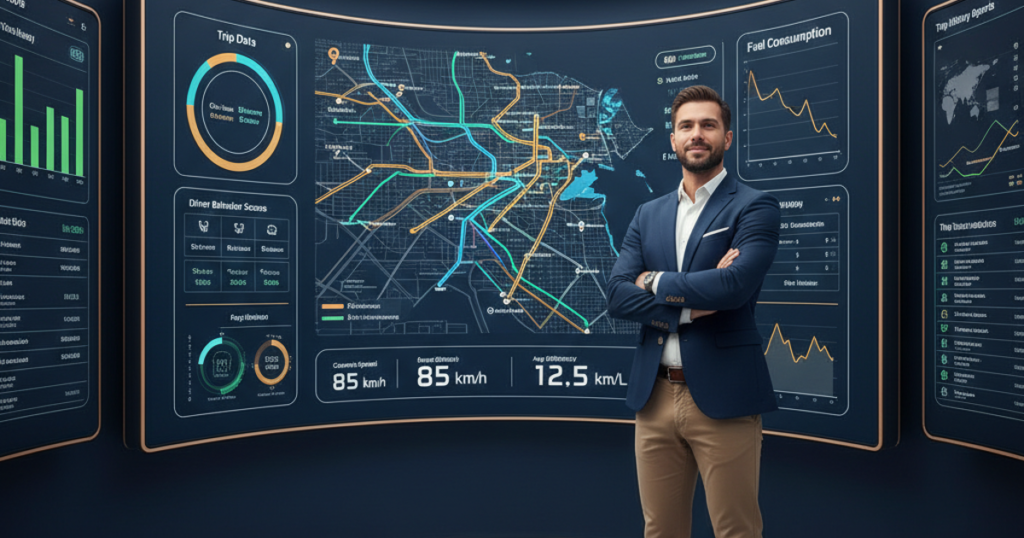
A Trip Data Monitoring System collects, records, and analyzes data from every vehicle journey. This includes route taken, distance covered, speed, idle time, fuel consumption, and driver behavior events such as harsh braking or rapid acceleration. The system aggregates this data into reports that fleet managers can use to evaluate performance and spot inefficiencies.
In Kuwait, where fuel costs, traffic congestion, and compliance requirements all place pressure on fleet operators, having this level of insight is not a luxury. It is a competitive necessity. Businesses that use trip data consistently are better positioned to control expenses, manage driver accountability, and respond to operational challenges before they escalate.
According to McKinsey and Company, fleet operators who adopt data-driven management practices can reduce overall operating costs by a measurable margin within the first year of implementation. This aligns closely with what many Kuwait-based businesses experience when they transition from manual tracking to automated trip monitoring.
Key Benefits of Trip Data Monitoring for Kuwait Fleet Operators
Understanding the tangible benefits of trip data monitoring helps business owners see beyond the technology and focus on the outcomes. Below are the most impactful advantages for fleet operators in Kuwait.
Smarter Route Planning and Reduced Fuel Waste
Trip data reveals which routes take longer, consume more fuel, or generate more idle time. Fleet managers can use this information to redesign delivery or service routes for maximum efficiency. For example, if trip reports consistently show that a particular route through a congested area adds 20 minutes per journey, managers can redirect drivers to a faster alternative. Over hundreds of trips per month, these savings compound significantly. Integrating this capability with a GPS fleet management system in Kuwait allows route optimization to happen in real time, not just in post-trip analysis.
Improved Driver Accountability and Safety Standards
Trip data does not just track vehicles. It monitors how drivers operate them. Metrics such as speeding frequency, harsh cornering, sudden braking, and prolonged idling give managers an objective picture of driver behavior. This data creates a foundation for fair, evidence-based performance reviews. Drivers who know their behavior is recorded tend to drive more responsibly, which reduces accident risk and vehicle wear. For businesses that want to go even further, combining trip monitoring with an AI driver monitoring system in Kuwait adds real-time in-cabin alerts that address unsafe behavior the moment it occurs, not after the fact.
Stronger Compliance and Reporting for Kuwait Businesses
Fleet operators in Kuwait must often comply with internal audit requirements, government transport regulations, and insurance documentation standards. Trip data monitoring generates structured records for every journey, including timestamps, distances, driver identity, and route details. This eliminates the need for manual logbooks, which are prone to error and manipulation. When compliance questions arise, managers can pull accurate reports instantly rather than searching through paper records. A dependable Fleet Management Solution in Kuwait that includes automated reporting makes compliance a routine process rather than a stressful scramble.
Better Maintenance Planning Through Trip Mileage Tracking
Every trip adds kilometers to a vehicle’s total usage. Trip data monitoring tracks accumulated mileage accurately and can trigger maintenance alerts based on usage thresholds rather than calendar dates. This approach prevents both premature servicing, which wastes resources, and delayed servicing, which risks mechanical failure. A transport company in Kuwait that operates 30 or more vehicles benefits enormously from automated maintenance scheduling because managers no longer need to manually track each vehicle’s service history. This reduces breakdown risk, extends vehicle lifespan, and keeps the fleet operating at full capacity.
How Trip Data Connects to a Broader Fleet Management Strategy
Trip data does not operate in isolation. Its true value emerges when it is integrated with other fleet management tools. A Vehicle Tracking System in Kuwait provides the real-time location layer that makes trip data spatially meaningful. Managers can see not just what happened during a trip but exactly where and when it happened. This makes investigation of incidents, customer delivery disputes, or route deviations far more straightforward.
Platforms like the Safari Fleet Management System offered by TechBiz Solutions combine trip monitoring, real-time tracking, and driver behavior analytics into a single, unified dashboard. This means fleet managers in Kuwait do not need to switch between multiple tools to get a complete picture of fleet performance. Everything is centralized, searchable, and exportable for reporting purposes.
When trip data is viewed alongside fuel consumption records, maintenance logs, and driver scorecards, fleet managers gain a 360-degree view of operational performance. This holistic perspective is what transforms fleet management from a reactive process into a proactive strategy.
Choosing the Right Trip Data Monitoring System for Your Kuwait Business
Not all trip monitoring systems offer the same depth of data or ease of use. When evaluating options, Kuwait fleet managers should prioritize the following criteria.
- Real-time data access: The system should deliver live updates, not just end-of-day summaries, so managers can respond to situations as they develop.
- Customizable reporting: Every business has different KPIs. The system should allow reports to be filtered by driver, vehicle, date range, or trip type.
- Integration capability: The platform should connect seamlessly with existing GPS tracking, fuel management, or ERP systems already in use.
- User-friendly interface: Managers and supervisors at all technical levels should be able to navigate the dashboard without extensive training.
- Local support: Working with a Kuwait-based provider like TechBiz Solutions ensures that technical support, system customization, and onboarding are handled by a team that understands local business conditions.
The vehicle tracking system options available in Kuwait today range from basic GPS loggers to fully integrated fleet intelligence platforms. Businesses that plan for long-term growth should choose systems that scale with their fleet size and operational complexity.
Real-World Impact: What Kuwait Fleet Managers Report After Adoption
Fleet operators who have implemented trip data monitoring consistently report improvements across several operational areas. Fuel costs decrease as route inefficiencies are corrected. Driver behavior improves when performance data is shared transparently during regular reviews. Maintenance costs stabilize when servicing is triggered by accurate usage data rather than guesswork. Customer satisfaction also rises when delivery windows become more predictable because dispatchers have reliable trip duration benchmarks to work from.
These outcomes are not theoretical. They reflect the experience of businesses in Kuwait and across the Gulf region that have committed to data-driven fleet operations. The International Telecommunication Union notes that digital adoption in transport and logistics sectors across the Middle East is accelerating, with fleet management technology among the fastest-growing segments.
Conclusion
A Trip Data Monitoring System in Kuwait is one of the most practical tools available to fleet operators who want to move from intuition-based decisions to evidence-based strategy. By capturing detailed journey data, monitoring driver behavior, supporting compliance, and enabling smarter maintenance planning, trip monitoring delivers measurable value across every area of fleet operations. When integrated with a comprehensive Fleet Management Solution in Kuwait and a reliable Vehicle Tracking System in Kuwait, the result is a fleet that runs more efficiently, more safely, and more profitably. TechBiz Solutions is ready to help Kuwait businesses implement the right system for their needs. Visit our contact page to speak with a fleet technology specialist today.
Frequently Asked Questions
A Trip Data Monitoring System records vehicle journey details such as speed, route, idle time, and fuel usage. It processes this data into reports that help fleet managers using a fleet management solution in Kuwait identify inefficiencies and improve operations.
It identifies fuel-wasting routes, excessive idling, and unnecessary trips. Managers use these insights to reassign routes and correct driver habits, which directly lowers fuel bills and reduces wear on vehicles across the entire fleet over time.
Yes. The system flags unsafe driving patterns like speeding, harsh braking, and rapid acceleration. Managers can use this data in driver coaching sessions, which encourages safer habits and reduces accident frequency across the fleet over time.
They are complementary rather than identical. A Vehicle Tracking System provides real-time location data, while trip monitoring captures journey analytics. Together, they give fleet managers in Kuwait a complete operational picture for smarter daily decision-making.
It automatically generates detailed journey logs including timestamps, distances, and driver identity. These structured records replace manual logbooks and make audit responses straightforward, reducing compliance risk for businesses managing multiple vehicles across Kuwait.
Logistics companies, government transport departments, construction firms with site vehicles, and corporate fleets all benefit significantly. Any organization managing multiple vehicles gains operational clarity and cost control by adopting fleet management practices supported by data from trip monitoring.
Most Kuwait fleet operators notice improvements in driver behavior and fuel efficiency within the first 30 to 60 days. Full operational benefits, including optimized routes and reduced maintenance costs, typically become measurable within three to six months of consistent use.
Yes. Modern trip monitoring platforms are designed to integrate with GPS trackers, fuel management tools, and ERP systems. TechBiz Solutions ensures that integrations are configured correctly so Kuwait businesses can access all fleet data from one unified dashboard.
It captures route maps, total distance, trip duration, average and peak speed, idle time, fuel consumption estimates, and driver behavior events. These data points combine to create a comprehensive performance profile for every vehicle and driver in the fleet.
Prioritize real-time reporting, customizable dashboards, local technical support, and scalability. Reviewing the top vehicle tracking systems in Kuwait for 2026 can help you compare features and identify a platform that aligns with your fleet size and business goals.