
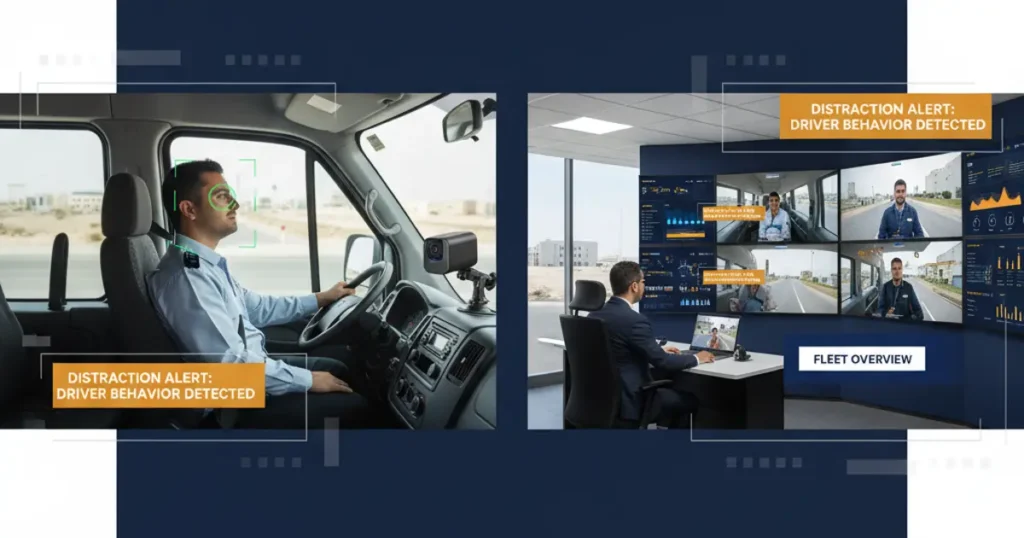
Distracted driving is a serious threat on Kuwait’s roads. Every year, accidents caused by inattentive drivers result in injuries, fatalities, and significant financial losses for businesses. The Driver Distraction Detection System in Kuwait is changing how fleet operators and businesses respond to this challenge. By using AI-powered cameras and real-time alerts, these systems identify dangerous driver behaviors before they lead to accidents. This blog explores how this technology works, why it matters, and what fleet managers in Kuwait need to know.
Key Takeaways
- The Driver Distraction Detection System in Kuwait uses AI and camera technology to detect unsafe driver behaviors in real time, reducing accident risk significantly.
- A Remote Driver Monitoring System in Kuwait allows fleet managers to oversee driver behavior from a central location without being physically present in the vehicle.
- An In Vehicle Monitoring System in Kuwait tracks multiple safety indicators simultaneously, including fatigue, phone use, and lane deviation, to provide a complete picture of driver performance.
What Is a Driver Distraction Detection System?
A Driver Distraction Detection System is an AI-powered safety tool installed inside commercial and fleet vehicles. It uses cameras, sensors, and machine learning algorithms to continuously monitor the driver’s face, eyes, and body posture. When the system detects signs of distraction, such as looking away from the road, using a mobile phone, or showing fatigue symptoms, it instantly triggers an alert.
These alerts can be audible alarms inside the vehicle, real-time notifications to fleet managers, or both. The goal is simple: catch dangerous behavior early and give the driver a chance to correct it before an accident occurs. According to the World Health Organization, road traffic injuries are among the leading causes of death globally, and driver distraction is a major contributing factor.
How the Remote Driver Monitoring System Works in Kuwait
A Remote Driver Monitoring System in Kuwait takes distraction detection one step further by connecting in-vehicle cameras and sensors to a centralized fleet management platform. Fleet supervisors can view live video feeds, receive automated alerts, and review historical driving data from any location. This is especially valuable for businesses operating large fleets across Kuwait’s highways and urban areas.
The system typically works through the following process:
- Camera installation: Forward-facing and driver-facing cameras are mounted inside the vehicle.
- AI analysis: The onboard processor analyzes facial expressions, head movements, and eye patterns in real time.
- Alert generation: When a distraction event is detected, the system alerts the driver immediately and notifies the fleet manager.
- Data logging: All events are recorded and stored for review, coaching, and compliance reporting.
- Dashboard reporting: Fleet managers access comprehensive reports on driver behavior trends and risk scores.
This connected approach helps businesses move from reactive accident management to proactive driver safety. For fleet operators in Kuwait, integrating a remote monitoring system into their operations means fewer accidents, lower insurance costs, and better compliance with local traffic regulations.
Key Features of an In Vehicle Monitoring System in Kuwait
The In Vehicle Monitoring System in Kuwait is the hardware and software layer installed directly in each vehicle. It is the foundation on which distraction detection and remote monitoring capabilities are built. A robust in-vehicle system does more than just watch the driver. It tracks a wide range of safety-critical data points simultaneously.
Common features of a modern in-vehicle monitoring system include:
- Fatigue detection: Identifies drooping eyelids, yawning, and slow reaction patterns that signal driver fatigue.
- Distraction alerts: Detects when a driver looks away from the road for too long or uses a handheld device.
- Harsh driving behavior: Records sudden braking, rapid acceleration, and sharp cornering events.
- GPS integration: Combines driver behavior data with location tracking for full situational awareness.
- Video evidence: Captures footage of distraction events for review and driver coaching sessions.
- ADAS integration: Works alongside Advanced Driver Assistance Systems for lane departure warnings and forward collision alerts.
For businesses managing delivery trucks, oil field vehicles, school buses, or government fleets in Kuwait, an In Vehicle Monitoring System in Kuwait provides the level of visibility needed to maintain high safety standards across every vehicle in the fleet.
Why Kuwait Businesses Need This Technology Now
Kuwait has one of the highest vehicle ownership rates in the world relative to its population. With dense urban traffic in areas like Salmiya and Fahaheel, and long highway stretches connecting industrial zones, the risk of distraction-related accidents is consistently high. Businesses that operate fleets face direct financial and legal exposure when their drivers are involved in accidents.
Beyond accident prevention, there are strong operational and compliance reasons to adopt this technology. Kuwait’s traffic authorities are placing greater emphasis on road safety enforcement. Businesses that can demonstrate proactive driver safety measures are better positioned in regulatory environments and insurance negotiations. Additionally, driver coaching programs supported by real distraction event data have been shown to change driver behavior over time, reducing incidents progressively.
TechBiz Solutions has been helping businesses in Kuwait implement fleet safety technologies since 2007. With a deep understanding of local business needs and operational environments, TechBiz provides customized solutions that integrate distraction detection, remote monitoring, and GPS fleet management into a single, user-friendly platform. You can explore more about how AI driver monitoring systems in Kuwait are being deployed to protect drivers and business assets.
Choosing the Right System for Your Fleet
Not all driver distraction detection systems are built the same. When evaluating options for your Kuwait-based fleet, consider the following factors to ensure you select a solution that matches your operational needs.
Accuracy of AI detection: The system should have a low false-positive rate. Frequent unnecessary alerts frustrate drivers and reduce trust in the system. Look for platforms with proven detection accuracy across different lighting conditions, including Kuwait’s bright daytime glare and nighttime driving scenarios.
Real-time connectivity: Ensure the system supports live data transmission. A delay in receiving a distraction alert defeats the purpose of real-time intervention. Check that the system is compatible with Kuwait’s cellular network infrastructure for reliable connectivity.
Integration capability: The best systems integrate with existing GPS tracking, fuel monitoring, and fleet management software. This reduces the burden of managing multiple platforms and gives fleet managers a single view of all vehicle and driver data.
Scalability: Whether you operate five vehicles or five hundred, the system should scale without compromising performance or data quality. Businesses in Kuwait’s oil, logistics, and construction sectors often expand fleets rapidly and need technology that grows with them.
Local support and training: Choose a provider with a strong local presence in Kuwait. Onboarding, driver training, and ongoing technical support are critical to long-term success. TechBiz Solutions offers implementation support tailored to Kuwait’s business environment. Learn more about how GPS fleet management in Kuwait combines with driver monitoring for comprehensive fleet safety.
The Business Case: Reducing Costs Through Safer Driving
Investing in a Driver Distraction Detection System in Kuwait is not just a safety decision. It is a sound financial strategy. Businesses that implement these systems consistently report measurable improvements in key operational metrics.
- Reduced accident costs: Fewer collisions mean lower repair bills, reduced downtime, and fewer insurance claims.
- Lower insurance premiums: Many insurers offer premium reductions for fleets with documented safety monitoring programs.
- Improved driver performance: Regular feedback and coaching based on monitoring data leads to safer, more responsible driving habits.
- Fuel savings: Reducing harsh driving behaviors like sudden braking and rapid acceleration also cuts fuel consumption.
- Liability protection: In the event of an accident, recorded data helps establish the facts and protect the business from unfounded claims.
Fleet safety technology pays for itself over time. The combination of fewer accidents, lower insurance costs, and improved driver performance creates a clear return on investment that most fleet operators in Kuwait can measure within the first year of deployment.
Conclusion
The Driver Distraction Detection System in Kuwait represents one of the most impactful investments a fleet operator can make. By detecting dangerous driver behavior in real time, connecting supervisors through a Remote Driver Monitoring System in Kuwait, and capturing comprehensive data through an In Vehicle Monitoring System in Kuwait, businesses gain the tools they need to protect their drivers, their assets, and their bottom line. Road safety in Kuwait is a shared responsibility, and technology is making it easier for businesses to fulfill that responsibility every day. To explore how TechBiz Solutions can help your fleet stay safe and efficient, visit our services page or get in touch with our team today.
Frequently Asked Questions
A Driver Distraction Detection System uses AI cameras to monitor driver behavior in real time. It detects phone use, fatigue, and inattention, then triggers instant alerts to the driver and fleet manager to prevent accidents before they happen.
Yes, remote driver monitoring systems are legally used in Kuwait by fleet operators. These systems support compliance with local traffic safety regulations and are increasingly encouraged by transport and logistics companies managing commercial vehicle fleets.
Modern AI-based systems have high detection accuracy, even in low light or glare conditions. They are trained on large datasets to minimize false alerts, ensuring drivers receive warnings only when genuine distraction behaviors are detected during their shift.
Yes, these systems are available at scalable price points suitable for small and large fleets. Businesses often recover the investment quickly through reduced accident costs, lower insurance premiums, and improved fuel efficiency from better driver behavior.
Basic GPS tracking records vehicle location and speed. An In Vehicle Monitoring System goes further by capturing driver behavior data such as fatigue signs, distraction events, and harsh driving patterns, giving fleet managers a complete safety picture.
Logistics companies, oil field operators, construction fleets, school bus operators, and government vehicle pools benefit most. Any organization running multiple commercial vehicles on Kuwait’s roads can significantly reduce risk and improve safety with this technology.
Yes, modern distraction detection systems are designed to integrate with existing GPS and fleet management solutions in Kuwait, enabling fleet managers to access all vehicle and driver data through a single unified dashboard for simpler operations.
Recorded distraction events provide specific, factual examples for driver coaching sessions. Managers can show drivers exactly when and where unsafe behavior occurred, making training more targeted, evidence-based, and effective at producing lasting behavioral improvements.
Yes, advanced systems use infrared cameras and AI trained for various environmental conditions. They maintain reliable detection accuracy during Kuwait’s night driving scenarios, desert dust conditions, and early morning low-visibility periods common across major highways.
TechBiz Solutions provides end-to-end implementation support, including system setup, driver training, and ongoing technical assistance. Their team understands Kuwait’s business environment, helping organizations through ADAS and safety system integration with minimal operational disruption.